Good Thursday morning!
In today’s edition of Your Daily Phil, we examine the push for U.S.-born IDF veteran Josh Boone, who was found dead on Sunday after struggling with post-traumatic stress disorder, to be recognized as a fallen soldier. We interview Lishay Miran Lavi, the wife of freed hostage Omri Miran, who wrote a book for children to help them learn to deal with loss. We feature an opinion piece by Shlomi Ravid about the need to hone in on a collective Jewish ethos that transcends divisions within Jewry today, and one by Rabbi Matthew Goldstone advocating for a shift from tuition to stipends in more ordination programs. Also in this newsletter: Andrés Spokoiny, Samuel J. Abrams and Diane Lipson Schilit and Howard
Schilit.
Spread the word! Invite your friends to sign up.👇 |
|
| -
A civilian funeral for U.S.-born IDF veteran Josh Boone is underway now in Beersheva, following a so-far unsuccessful effort by his family and friends to have him recognized as a fallen soldier.
-
The Israeli American Council’s annual summit kicks off today in Hollywood, Fla. Speakers at the three-day confab include Dr. Miriam Adelson, Haim Saban, Safra Catz and Shira Ruderman, along with a host of current and former Israeli and American government officials. If you’re there, say hi to Ayala Or-El, who is reporting for eJP from the confab.
|
|
|
A QUICK WORD WITH EJP'S JUDAH ARI GROSS |
To his friends and family, it seems like a cruel joke. After performing 748 days of reserve duty as a sniper in the 832 days since the Oct. 7 terror attacks, Master Sgt. (res.) Josh Boone is being denied official recognition as a fallen soldier because he died two weeks after his last round of reserve service ended.
Since the U.S.-born former “lone soldier,” who was recently diagnosed with post-traumatic stress disorder, was found dead near his home in Beersheva, Israel, on Sunday, his family, friends and fellow soldiers have pushed for this recognition. They see it as both something that Boone earned after an extended military service and deserved, as they see his PTSD-related death as resulting from that service. No cause of death has been made public, but friends and family have indicated that it was directly tied to his mental health struggles.
“Finally, after 748 days behind a sniper’s scope, he said to himself that he needed help. Do you know how hard that is? To have nothing in this country and to admit that you have a problem and you need treatment? And I’m sad to say that he lost that battle; he lost his war. His psychological war took him. This hero of Israel, Josh David Boone, deserves a military funeral and recognition as a fallen soldier, and it is insanity for him to be denied this because of two weeks,” Josh Frisch, a fellow lone soldier and friend of Boone, told the Knesset’s Foreign Affairs and Defense Committee (FADC) on Monday. Frisch and others also spoke in the parliament’s Committee for Immigration, Absorption and Diaspora Affairs, and some returned to the Knesset the following day to again speak in the FADC.
In addition to appearances in the Knesset, friends of Boone launched an online petition, which garnered nearly 30,000 signatures as of this morning, and nonprofits that support lone soldiers — troops who either do not have family in Israel or are not financially supported by their families — have shared Boone’s story widely on social media and similarly pushed for him to receive official recognition.
Those efforts have so far been in vain, however. Today, Boone is being buried in a civilian funeral in the New Beersheba Cemetery. Despite its civilian standing, Boone’s family asked as many attendees as possible to come wearing IDF uniforms to make it “as military-esque as possible,” according to one of Boone’s friends. Indeed, of the hundreds of people in attendance at the funeral, a large number arrived in the madei bet “work uniforms” associated with IDF reservists. Many also carried the yellow and green flags of Boone’s Golani Infantry Brigade.
At the funeral today, Boone’s father remembered him as a “sheepdog,” born to protect. His mother described his love for Israel from a young age, calling him the “biggest Zionist in the State of Idaho.” With tears in his eyes, Boone’s father appeared to reference his son’s mental health struggles after more than two years of combat duty in Gaza and Lebanon. “I listened to a documentary with Golda Meir one time. She made a statement that I’ve never forgotten. She said, ‘I can forgive you for killing my children. But I can never forgive you for making my children kill yours,’” he said, his voice catching.
While Boone’s story resonated most acutely with fellow foreign-born lone soldiers — being highly active in the community and standing out by coming from the exotic locale of Boise, Idaho — his death, and how it is being treated by Israel’s Defense Ministry, also serves as a grim indicator of what’s to come as the country grapples with the psychological effects of the past two years of war. Experts in Israel have been warning of a growing mental health “tsunami” in the wake of the Oct. 7 attacks and the more than two years of war that followed. This is particularly acute among infantry soldiers, who fought in densely populated urban areas.
“Historically, suicide rates tend to rise after wars end — when the adrenaline fades, when soldiers return home to find life has moved on, when they discover that the resilience that served them in combat does not serve them in daily life,” according to a report from the Israeli mental health group ICAR Collective, following roundtable discussion on the subject in the fall of 2025. Read the rest of ‘What You Should Know’ here. |
|
|
Ex-hostage’s wife writes book to help children deal with loss post-Oct. 7
|
The Oct. 7, 2023, Hamas attacks on Israel left children living near the Gaza border with significant emotional baggage — whether they themselves were kidnapped, had a loved one taken hostage or killed, or had to evacuate their home — and their parents and caregivers tasked with helping them regain hope and resilience. Lishay Miran Lavi, whose husband, Omri Miran, was held hostage by Hamas in Gaza for 738 days, sought to help children deal with loss and uncertainty related to Oct. 7 and beyond with her new book, Mojo’s Return: A Story of Resilience and Hope, which was published in Hebrew and English in November, reports Lahav Harkov for
eJewishPhilanthropy’s sister publication Jewish Insider.
Book’s purpose: “It’s a tool to reflect what happened for the girls and help them deal with the fact that their dad [was] not there,” Miran Lavi told JI last week. “It’s for my girls and for everyone’s children who experienced Oct. 7 with a great loss, like a father or uncle who is not coming back because he was murdered, or fell in the war.”
Read the full interview here and sign up for Jewish Insider’s Daily Kickoff here. |
|
|
How the language of Jewish Peoplehood can move us forward from the current crisis |
“The events of Oct. 7, 2023, and the ensuing war have left Jews not only insecure about their future but also ideologically torn and confused,” writes Shlomi Ravid, the founding director of the Center for Jewish Peoplehood Education, in an opinion piece for eJewishPhilanthropy. “I propose shifting the conversation back to the constitutive values of Jewish Peoplehood: What does Jewish mutual responsibility mean today? What elements of our ethos are essential to us? How do we navigate tensions between fate and destiny when they arise? … Without clarity about who we are and what we stand for, we cannot
build a coherent collective identity.”
Practical application: “Consider a recent concrete example: I heard a Haredi activist claim last week on Israeli TV that most Haredi Jews are anti-Zionist. Rather than debating Zionism — a conversation that often leads nowhere — I would be far more interested in discussing with him Haredi understandings of areivut and of our collective ethos. These conversations can illuminate both shared commitments and real differences. They can open the door to dialogue and perhaps to the recognition that, despite disagreements, we share a sense of joint fate and destiny that can enable cooperation.”
Read the full piece here. |
|
|
We need a different model: From tuition to stipends |
“[M]any of the recent assessments sidestep the most glaring deterrent to rabbinical education highlighted by the Atra report: cost,” writes Rabbi Matthew Goldstone, assistant academic dean and associate professor at the Academy for Jewish Religion, in an opinion piece for eJewishPhilanthropy. “Many ordination students simply cannot afford to become clergy.”
Call to funders: “We must change the model from asking how we can make clergy education affordable to asking how we can monetarily incentivize qualified students to heed their calling to serve the Jewish community – especially in this moment of polarization, rising antisemitism and rapid change. AJR currently has over 100 students across our programs, and other non-denominational schools like Hebrew College have also been increasing enrollment, but we know rabbinical seminaries could be training so many more future clergy if we could cover tuition and provide stipends. The Jewish philanthropic community can make this a reality. It is time we embrace this different path before even more talented leaders end up as would-be clergy instead of serving as the rabbis and cantors we so desperately need.”
Read the full piece here. |
|
|
‘Comfort of the Known’: In The Times of Israel, Andrés Spokoiny expresses concern that the Jewish community isn’t learning from the mistakes made during the 2025 New York City mayoral election. “Zohran Mamdani did not win simply because [former Gov. Andrew] Cuomo was weak or because the field was divided. He won because a coalition formed around him — and because much of the Jewish community found itself unable to prevent, shape, or even meaningfully enter that coalition. That failure was not tactical alone. It was structural, political, and moral. One of the Jewish values I cherish the most is self-criticism – and I see very little of that in the wake of this election. So, for once, I want to challenge myself and our community to think
differently, not with rightful indignation but with an eye to what works and what doesn’t.” [TOI]
Opportunity for Impact: In The Algemeiner, Samuel J. Abrams responds to Joe Roberts’ recent opinion piece in eJewishPhilanthropy, “American Jewry’s future lies not on the coasts, but in its heartland.” “Roberts’ argument is not anti-coastal. It is pro-resilience
and deserves careful attention from communal leaders and donors alike. … Too often, Jewish communities outside the major hubs are described exclusively in terms of vulnerability. Sometimes those concerns are real. But they are not the whole story. In smaller communities, impact is magnified. Five young families can stabilize a synagogue. One capable professional can reverse a decade of attrition. One serious donor can change the future of an entire community.” [Algemeiner]
Eshet Chayil: In Ynet, Tamar Trabelsi-Hadad profiles Naama Rubinstein, who joined the IDF at 44 this year as a volunteer reservist. “For two weeks at Camp 80, an IDF training base, Rubinstein — a chemistry teacher, university researcher and mother of four — completed
basic training with hundreds of new recruits, many decades younger. It was a choice she made deliberately, after canceling a military exemption she received as a teenager for religious reasons… She enlisted through ‘Phase B Recruitment,’ an IDF program allowing people who were previously exempt to serve during wartime. After completing basic training, she contacted several units on her own initiative and now serves as a corporal in a role that draws on her scientific expertise.” [Ynet]
|
|
|
If you’re passionate about solving current environmental challenges and studying Jewish history, don’t miss Spertus Institute’s free online workshop next week. Author Dr. Dean Bell will discuss historical examples of Jewish experiences related to natural disasters outlined in his new book, Judaism, History and the Environment: Climate Change and Natural Disasters. Tuesday, Jan. 20, 12:30-1:30 CDT (on Zoom). Reserve your spot.
|
Be featured: Email us to sponsor content with the eJP readership of your upcoming event, job opening or other communication. |
|
|
Israel and Iran quietly exchanged messages through Russia just prior to the onset of protests in Iran that neither country would launch a preemptive attack on the other…
White House Special Envoy Steve Witkoff announced the start of the second phase of the ceasefire agreement between Israel and Hamas, saying the U.S. “expects Hamas to comply fully with its obligations, including the immediate return” of the body of Ran Gvili, who was killed on Oct. 7, 2023… A new report by the Local Initiatives Support Corporation found that faith-based organizations, such as synagogues and churches, are uniquely poised to use their land holdings to create affordable housing…
The Atlanta Jewish Times examines how the local Jewish community is preparing for Georgia’s upcoming legislative session…
The Gates Foundation released its $9 billion budget for the upcoming year, along with plans to begin laying off staff members as the organization looks to shut down by 2045…
NPR’s Michele Keleman spotlights Akko, Israel, for the broadcaster’s weekly “Far-Flung Postcards” series…
Following an inquiry into the decision of the West Midlands, U.K., police force to ban Maccabi Tel Aviv fans from a recent match against Aston Villa, Home Secretary Shabana Mahmood called on the department’s head to resign; Chief Constable Craig Guildford acknowledged
having used an AI-generated search that pointed the department to false information about the Israeli team…
The board of Australia’s Adelaide Festival apologized to a Palestinian-Australian academic who had been uninvited from the literary event over her past statements about Zionists; the removal of Randa Abdel-Fattah had prompted dozens of speakers to drop out of the annual event, which was ultimately canceled…
Police in Iraq said they arrested a man who is a suspect in a series of arson attacks in Australia, including the December 2024 firebombing of a synagogue in Melbourne… |
|
|
The University of Florida Hillel announced a “transformational seven-figure gift” from Diane Lipson Schilit and Howard Schilit, for whom the Hillel will now be renamed… |
|
|
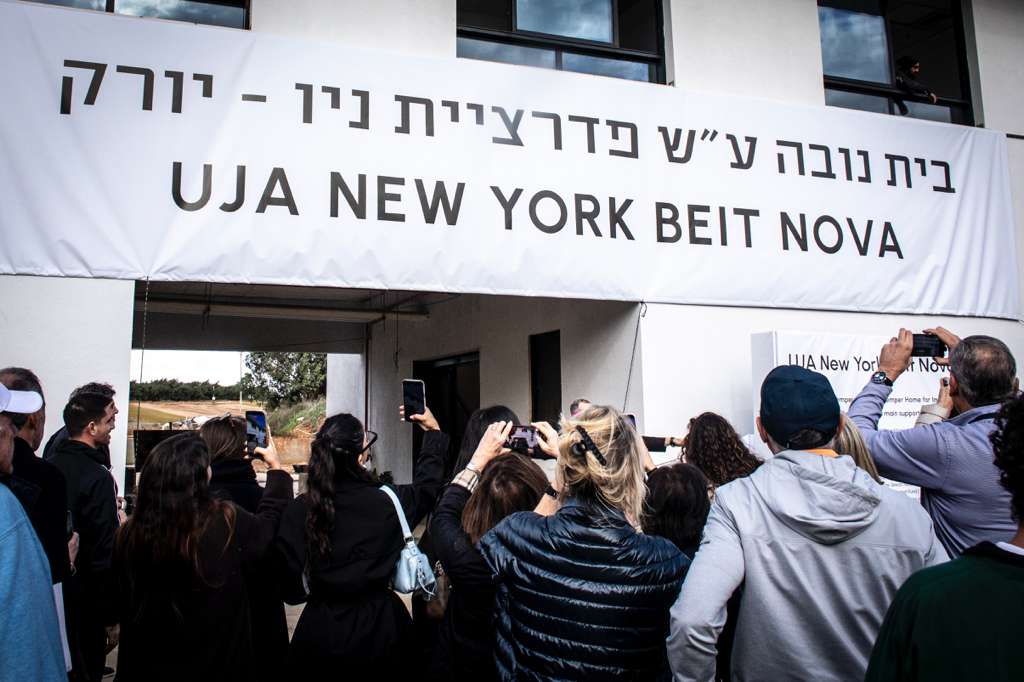
The Tribe of Nova Foundation opens its Beit Nova facility yesterday outside of Netanya, Israel. The center, which was funded primarily by UJA-Federation of New York, is meant to provide support to survivors of the terror attack on the Nova music festival in southern Israel on Oct. 7, 2023.
“The UJA New York Nova House stands as a symbol of hope, resilience and the enduring strength of the Nova community,” Eric Goldstein, CEO of UJA-Federation of New York, said at the ribbon-cutting event. “True to the Nova slogan, ‘We will dance again,’ this House will provide opportunities for healing, growth and community connection.” |
|
|
KRISTINA BUMPHREY/VARIETY VIA GETTY IMAGES |
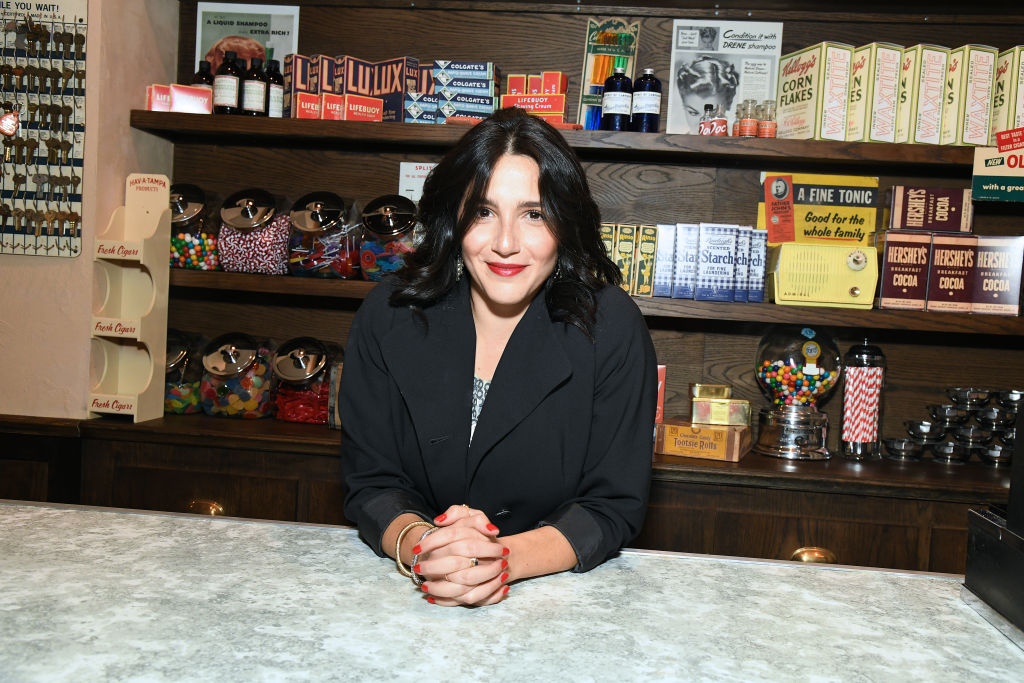
Actress, singer and writer based in New York City, she starred as Hodel in Bartlett Sher's acclaimed revival of “Fiddler on the Roof,” Samantha Massell turns 36…
Senior counsel at Covington & Burling, he was previously the domestic policy advisor to President Jimmy Carter, U.S. ambassador to the EU and deputy secretary of the treasury, Ambassador Stuart E. Eizenstat turns 83… Partner in BECO Management LLC and vice chair of the Jewish Policy Center, Michael David Epstein turns 81… University professor at Columbia University, he won the 2008 Nobel Prize in Chemistry, Martin Chalfie turns 79… President of Ben-Gurion University of the Negev for 16 years, then a member of the Knesset for nine years, Avishay Braverman turns 78… Longtime member of Congregation B’nai B’rith in Santa Barbara, Calif., Madelyn Silver Palley… Founder of Prospect Global, Toni G. Verstandig…
Chairman and CEO of Stagwell Global, Mark Penn… Football head coach and general manager, he has worked in both the NFL and CFL, Marc Trestman turns 70… President and CEO of Warner Bros. Discovery, David M. Zaslav turns 66… Rabbi at Bar-Ilan University's Institute of Advanced Torah Studies, he holds a Ph.D. in theoretical physics, Michael Avraham turns 66… Rabbi of Rumson (N.J.) Jewish Center at Congregation B’nai Israel, Douglas Sagal… Cryptographer, computer security specialist, blogger, writer, author of 13 books, he is a fellow and lecturer at Harvard's Kennedy School, Bruce Schneier… Partner in the NYC office of Gibson Dunn, Barry H. Berke turns 62… White House deputy press secretary in the Bush 43 administration, now a podcast host, Adam L. Levine turns 57… Filmmaker and educator, her films are aimed at Haredi female audiences, Tali Avrahami turns 57… Israeli journalist for Maariv, based in Poland, Nissan
Tzur turns 53… Former deputy prime minister and minister of foreign affairs of Belgium, she was elected as a member of the European Parliament in 2024, Sophie Wilmès turns 51… Basketball analyst for Fox Sports, he is also the men's basketball head coach at the University of Wisconsin–Green Bay, Doug Gottlieb turns 50… Judge of the United States Court of Appeals for the Second Circuit, Judge Steven Menashi turns 47… Israeli-Italian model, television personality and actor, Jonathan Kashanian turns 45… Editor emeritus of The Daily Wire and conservative political commentator, Ben Shapiro turns 42… Investigative reporter at The New York Times focused on health care, Sarah Kliff… Real estate
investor, Hershy Tannenbaum… CNN's Jerusalem correspondent, Jeremy Diamond turns 36...
|
|
|
|