Good Monday morning!
In today’s edition of Your Daily Phil, we cover journalist Bret Stephens’ “State of World Jewry” address last night at 92NY in Manhattan, and report on a new resource for funders about early-childhood initiatives. We feature an opinion piece by Yossi Prager about creating a resource offering practical guidance for funders; Rabbi Morey Schwartz kicks off Jewish Disability Awareness and Inclusion Month with a call to think beyond physical access and accommodation; and Laura Geller and Beth Lieberman explore the role of ritual in marking the milestones of later adult life. Also in this issue: Michael Bresler, Richard Tofel
and Kevin Warsh.
Spread the word! Invite your friends to sign up.👇 |
|
| -
The Vancouver, Canada-based Ronald S. Roadburg Foundation has donated $50 million CAD to the soon-to-be University of Kiryat Shmona in the Galilee (formerly Tel Hai College), whose main campus will be named the Roadburg Campus; the donation comes as part of a broader funding push for the northern Israeli city.
-
A mayor in southern Israel — whose name and city cannot be published under a gag order — is suspected of pocketing millions of shekels in wartime donations for his constituents.
- The JCC Association of North America is holding its Mifgash-Executive Leadership Retreat today in Atlanta.
- The Association of Reform Jewish Educators’ three-day annual gathering kicks off today in Denver.
- The Yael Foundation’s annual conference starts tomorrow morning in Vienna.
- Israel’s tourism conference, IMTM, begins tomorrow in Tel Aviv.
|
|
|
The American Jewish community needs to dismantle its large communal institutions and reallocate its ample resources to building Jewish identity, rather than combating antisemitism. So argued New York Times columnist Bret Stephens last night in the 46th annual “State of World Jewry” address at the 92NY in Manhattan, reports Jewish Insider’s Haley Cohen for eJewishPhilanthropy.
“The fight against antisemitism, which consumes tens of millions of dollars every year in Jewish philanthropy, is a well-meaning but mostly wasted effort,” he said. “We should spend the money and focus our energy elsewhere. The same goes for efforts to improve pro-Israel advocacy.”
Stephens, who is also the editor-in-chief of Sapir, Maimonides Fund’s online journal of Jewish thought, said that if it were up to him, he would “dismantle” American Jewish institutions such as the Anti-Defamation League and the Jewish Federations of North America.
This year’s address comes at an inflection point for American Jews. For more than two years, Jewish communities around the country demonstrated a historic united effort to bring home the hostages kidnapped by Hamas on Oct. 7. With the release of the remaining hostages and a ceasefire in the Israel-Hamas war, Jewish leaders are questioning what the new consensus issues are.
“We have vast resources, but we have limited resources, and since Oct. 7, tens of millions of dollars are going to the subject of ‘What are we going to do about antisemitism?’” Stephens said. “That’s not how Jewish money should be spent.”
Efforts such as ensuring Holocaust education is part of every private school curriculum or universalizing the International Holocaust Remembrance Alliance’s working definition of antisemitism are “not working” in the fight against antisemitism, Stephens said. He provided several examples such as, “Tucker Carlson’s influence and popularity [soaring]” and the statistic that “in New York State, 1 in 5 millennials and Gen Zs believe the Jews caused the Holocaust.”
Instead, Stephens suggested that resources should go toward building more Jewish day schools across the country, among other Jewish identity-strengthening causes. His suggestion echoed one made by podcast host Dan Senor, who delivered last year’s “State of World Jewry” address, saying that the key to thriving American Jewry is “a recalibration in favor of our community’s needs,” with Jewish day schools and summer camps being some of the strongest contributors of a solid Jewish identity.
In his address, Stephens, who coined the now-widely referenced term “Oct. 8 Jew” one month after the Oct. 7 attacks in Israel, said he had been wrong with his initial definition, of a Jew “who woke up to discover who our friends are not.” Instead, he said, “the Oct. 8 Jew was the one who woke up trying to remember who he or she truly is,” Stephens said.
Read the full report here. |
|
|
'No wrong door' into early-childhood investments, nonprofit consulting group says |
A growing body of research shows that the first five years of a child’s life define their future. While their brain and body are rapidly forming, the care that they receive improves their ability to lead healthier adult lives, physically and emotionally. Accordingly, philanthropy has grown increasingly interested in supporting early-childhood programs. But the authors of a new guide on the topic — “Investing in Our Future: Critical Ways Philanthropy Can Help Every Young Child and Family Thrive” — found that many would-be funders don’t know where to start. “We repeatedly hear from donors that they understand the importance, but don't really know where to go within this space,” Maggie Davies, partner at The Bridgespan Group consulting nonprofit and co-author of the guide, told eJewishPhilanthropy’s Jay Deitcher.
Choose your own adventure: Investing in early-childhood initiatives intersects with many issues philanthropists care about, including education, racial equity, health, housing, gender equity and economic justice, Katherine Kaufmann, a Bridgespan partner and co-author of the guide, told eJP. If asked where someone should focus their investment, Kaufmann would reply with more questions: “What do you care most about? Do you care about your community, the city you live in? Do you care about your state? Are you really interested in expectant moms? Are you really worried about or thinking about nurturing care and how we provide the array of options for families? There are so many options for making a difference in these earliest years that there's almost no wrong door.”
Read the full report here. |
|
|
Bringing philanthropy’s foundations into focus |
“The culture of American Jewish philanthropy is generous and deeply values-driven. It can also be fragmented, informal and vulnerable to mission drift, especially during leadership transitions or moments of rapid giving,” writes Yossi Prager, senior managing director of JFN Consulting, in an opinion piece for eJewishPhilanthropy. “Over the past year, in conversations with foundations and major donors, I heard questions that deeply resonated with me … Those questions led me to create a set of brief articles called ‘Foundations in Focus,’ each focused on one question and offering practical advice for funders.”
Designed for utility: “Three principles shaped the series. First, brevity with utility: each piece is short, but every paragraph earns its place and translates concepts into actions. Second, neutrality with clarity. We present the tradeoffs and recommend processes that fit diverse values and contexts. Third, immediate usability — every one of these pieces should be applicable today, wherever and for whoever they are relevant.” Read the full piece here. |
|
|
Beyond the ramp: Why intellectual accessibility is the next frontier of Jewish inclusion |
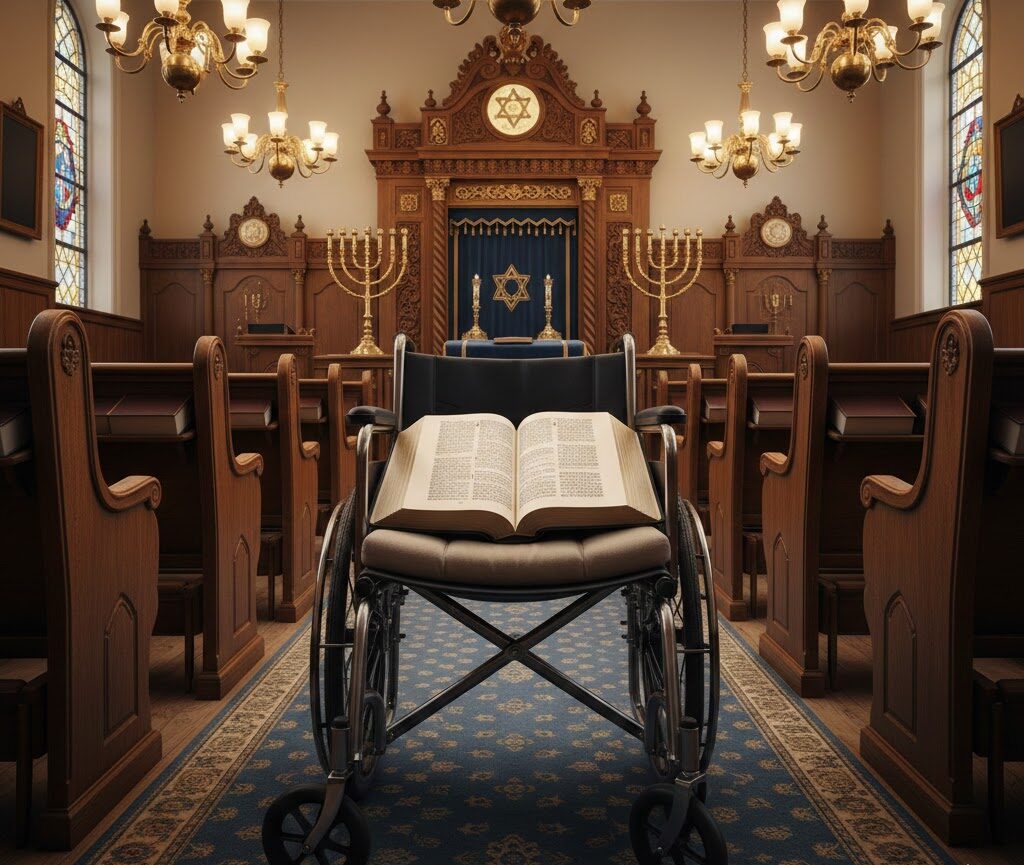
“For years, the Jewish community’s conversation around inclusion has, rightfully, focused on the physical and the sensory. We have built ramps to our bimahs, installed hearing loops in our sanctuaries and printed large-print siddurim. We have made great strides in ensuring that every Jew can get through the door,” writes Rabbi Morey Schwartz, international director of the Florence Melton School of Adult Jewish Learning, in an opinion piece for eJewishPhilanthropy. “But as we mark Jewish Disabilities Awareness, Acceptance and Inclusion Month (JDAIM) this February, we must ask a more
challenging question: Once everyone is in the room, is the wisdom within that room truly accessible to them?”
Rethinking the delivery: “This means recognizing that a deep, sophisticated connection to Jewish text and tradition is not a luxury for the neurotypical, but a birthright for every adult, including those with intellectual and developmental disabilities (I/DD). … In the world of adult education, there is often a quiet, unintentional bias suggesting that in order to make Judaism accessible to individuals with I/DD, ‘simplified’ versions of Judaism are required, often reverting to stories or concepts typically reserved for children. However, when we at Melton began the journey to develop the What’s Mine is Yours (WMIY) curriculum, we decided that ‘accessibility’ does not mean ‘simplicity.’ It means ‘intentionality.’”
Read the full piece here. |
|
|
Creating rituals for the transitions of aging |
“We face an unprecedented challenge as we are blessed with more years added to our life: How do we add more life to our years? The Book of Psalms offers guidance: “Show us how precious each day is; teach us to be fully here” (90:12). In other words, pay attention,” writes Rabbis Laura Geller and Beth Lieberman, authors of Moments That Matter: Marking Transitions in Midlife and Beyond, in an opinion piece for eJewishPhilanthropy.
Ritual as a tool: “Through ritual we can connect more deeply to what matters in our life and appreciate that we are part of something greater than ourselves. As Jews, we know of the significance of many different kinds of rituals, including rituals of transition when one moves from one life stage to another. We see many of these rituals in our early lives and we are struck by the absence of those rituals as we grow older. … What are the important moments in this new stage of life — midlife and beyond — that will help us notice what really matters in our lives as we grow older? What are those transitions from one social role to another? How might we mark the moments that matter?”
Read the full piece here. |
|
|
Board’s-Eye View: In The Times of Israel, Michael Bresler reflects on how boards shape the organizations they serve in ways that extend beyond their votes. “Like many boards, we worked hard to stay at the right altitude. Governance, not operations. Oversight, not management. Those boundaries matter. But over time, I began to notice something else. The organization wasn’t just responding to our decisions. … What we asked for shaped how people spent their time. What we prioritized shaped what felt risky to challenge. What we tolerated became normal. No one set out to teach those lessons. But they were learned all the same. This isn’t a critique of boards. It’s an acknowledgment of
their influence. … Judaism has always understood that values are sustained through structure. We don’t rely on intention alone. We embed what matters into rhythms, boundaries, and expectations. That insight applies just as much to governance as it does to ritual.” [TOI]
Centering Affordability: In Inside Philanthropy, Michael Kavate reports on a pivot in messaging among climate change-focused nonprofits and funders from addressing a “climate emergency” to addressing a crisis of affordability. “As one nonprofit leader put it to the New York Times after Democrats swept this year’s special elections: ‘Electricity is the new price of eggs.’ Lena Moffitt, executive director of the climate advocacy group Evergreen Action, highlighted Virginia Gov. Abigail Spanberger and New Jersey Gov. Mikie Sherrill’s success in turning a challenging economic
moment into an opportunity in last year’s elections. Both addressed high electricity prices with an argument for clean, affordable power that doubled as a call for climate action. ‘And I think funders increasingly agree,’ Moffitt said. ‘We’re seeing a lot of alignment around affordability as a key strategy,’ she said.” [InsidePhilanthropy]
Cutting the Fat: On his Substack, Second Rough Draft, Richard Tofel, the former president of the nonprofit news outlet ProPublica, offers the “modest proposal” of slashing the overhead budgets of philanthropic foundations and using the savings for grants. “Over well more than a decade, the American Fund spent only
$67,000 (about $1.25 million today), or 3.5% of its total spending, on its own operations — the rest went to gifts and grants. This was possible because the Fund hired essentially no staff, with its work being done by its many impressive directors… And here’s what it made me wonder: Especially in this moment of overwhelming needs across the social sector, as the federal government withdraws from so many crucial activities it had undertaken and supported for a half century, should institutional foundations recast themselves in the model of the American Fund, dispensing with their large staffs and instead restocking their boards with leaders who could directly disperse their largess? … That total spent on running three foundations is more than half of the rescinded federal support of public broadcasting.” [SecondRoughDraft]
|
|
|
Be featured: Email us to sponsor content with the eJP readership of your upcoming event, job opening or other communication. |
|
|
President Donald Trump nominated Kevin Warsh, the son-in-law of philanthropist Ronald Lauder, to be chairman of the Board of Governors of the Federal Reserve on Friday, elevating an outspoken critic of the Fed’s current leadership who has recently indicated support for Trump’s broad goals of lowering interest rates, Jewish Insider’s Gabby Deutch reports…
In Charleston (S.C.)’s Post and Courier, Rabbi Stephanie Alexander makes the case for the South Carolina Pray Safe Act, which would provide funding for security grants for houses of worship and other nonprofits in the state…
Gregory Bovino, the head of U.S. Border Patrol, reportedly made antisemitic comments about Daniel Rosen, the U.S. attorney in Minnesota, who was unavailable to work on Shabbat, during a recent phone call with federal prosecutors; read Jewish Insider’s October 2025 interview with Rosen, during which he said he was motivated to take the position
because of the “rapid escalation of violent antisemitism”...
In the San Diego Jewish World, Heidi Gantwerk, the head of the local Jewish federation, recounts her recent visit to Mexico City as part of a Jewish Federations of North America and Jewish Agency for Israel trip south of the border to meet with representatives of the Central American Jewish community…
The San Francisco Chronicle spotlights the Philharmonia Baroque Orchestra’s latest series, “Jews & Music,” which examines lesser-known aspects of the Jewish musical canon…
The California Department of Education found that the Oakland Unified School District engaged in antisemitic discrimination in multiple instances since the Oct. 7 terror attacks and called for the Bay Area district to take corrective measures, including training for faculty and students regarding antisemitism awareness… The New York Times profiles Forward senior political reporter Jacob Kornbluh, the “London-born former professional lox-slinger” who is “ubiquitous on the forever-circuit of Jewish politics” as he covers New York City Mayor Zohran Mamdani…
Israeli basketball sensation and Portland Trail Blazers forward Deni Avdija has been selected as a Western Conference reserve for the NBA All-Star Game, becoming the first Israeli-born player to earn an appearance in the league’s marquee midseason showcase, Jewish Insider’s Matthew Shea reports… Herman Hillson Rose, a Providence, R.I.-based philanthropist, died on Saturday at 93… |
|
|
Bobbi and Larry Shulman donated $250,000 to the Montgomery College Foundation, with most of the amount to be used to launch the Jewish Experience Fund at the Rockville, Md., school to combat antisemitism and improve the integration of Jewish students…
Philanthropist MacKenzie Scott donated $59 million to the National Alliance on Mental Illness, nearly double the amount that she provided to the group in 2022… |
|
|
Rabbi Jason Herman has stepped down as executive director of the International Rabbinic Fellowship as he becomes the inaugural chairman and CEO of Dorshei Torah v’Tzion, representing a broad array of Modern Orthodox institutions…
Richard Sisisky has been elected the next chair of the board of trustees of The Community Foundation for Northeast Florida, succeeding Michael DuBow… |
|
|
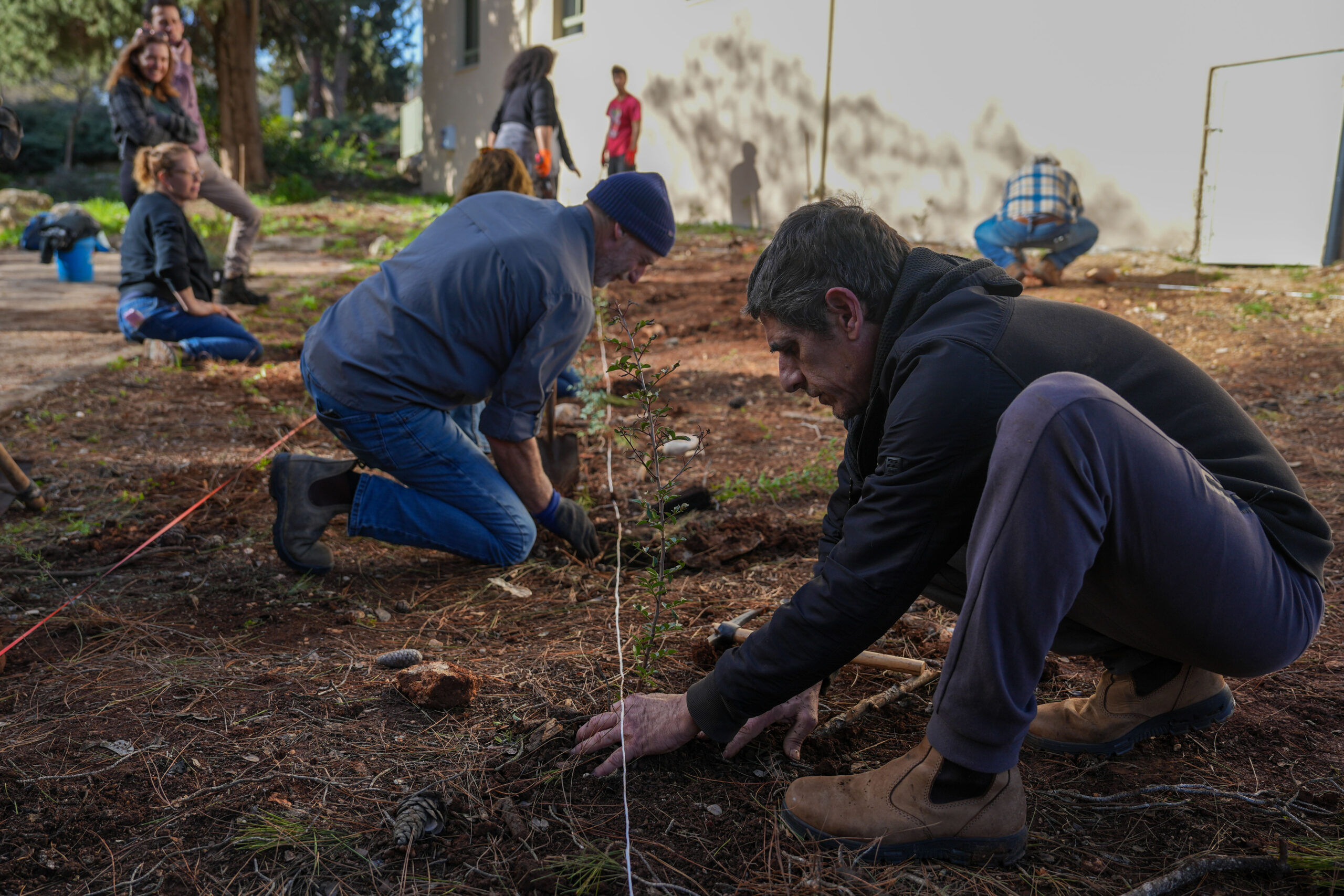
Residents of Kibbutz Malkia in northern Israel plant trees on Saturday ahead of today’s Tu B’Shvat holiday.
|
|
|
DOMINIK BINDL/GETTY IMAGES |
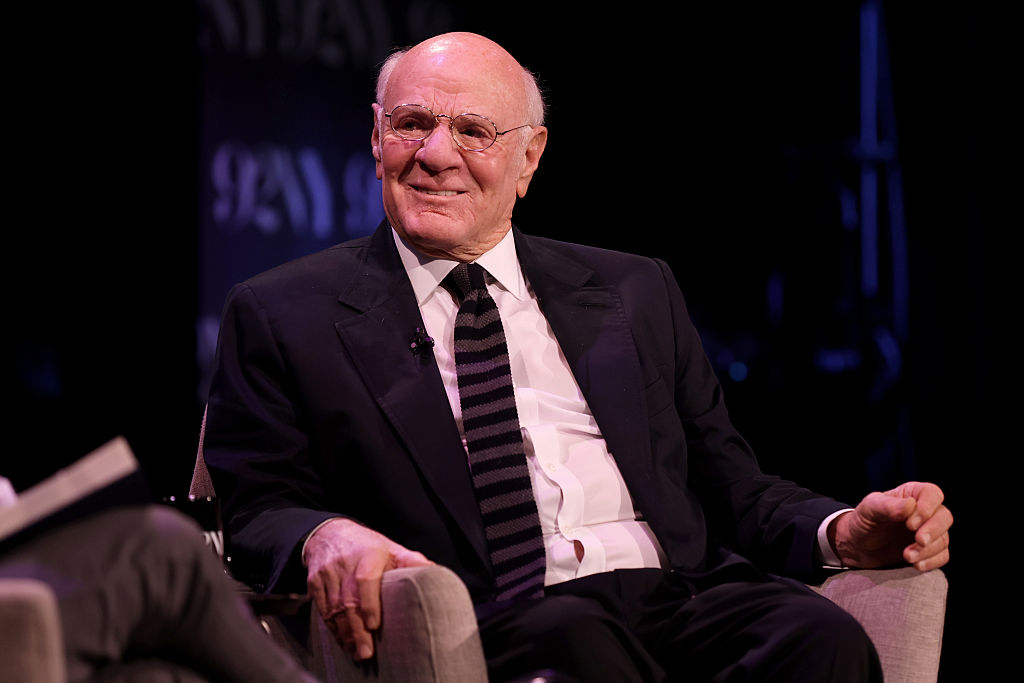
Chairman of IAC/InterActiveCorp and Expedia, Barry Diller turns 84...
Mayor of Irvine, Calif., Larry Agran (family name was Agranowsky) turns 81... Host of the Food Network program "Barefoot Contessa", Ina Rosenberg Garten turns 78... Actor, comedian and singer, Brent Spiner turns 77... Journalist, novelist and author, Michael Zelig
Castleman turns 76... U.S. Sen. John Cornyn (R-TX) turns 74... “Washington Secrets” columnist at the Washington Examiner, Paul Bedard... Science fiction publisher and author, Selina A. Rosen turns 66... Rabbi at the Pacific Jewish Center (the Shul On The Beach) in Venice, Calif., he is also a practicing attorney, Shalom Rubanowitz... Sportscaster who currently does play-by-play for the NFL, NBA, MLB and NHL, Kenny Albert turns 58... Movie and theater actress and screenwriter, Jennifer Westfeldt turns 56... Tony Award-winning actress, Marissa Jaret Winokur turns 53... Board-certified ophthalmologist, she is
married to New England Patriots owner Robert Kraft and sits on the board of the Kennedy Center, Dr. Dana Blumberg... Basketball coach for many Israeli teams over more than 20 years, Dan Shamir turns 51… Actress and comedian, Lori Beth Denberg turns 50... Singer, songwriter and multi-instrumentalist whose stage name is Mayer Hawthorne, Andrew Mayer Cohen turns 47... Assistant professor at Clemson University, Rebecca Shimoni Stoil, Ph.D. ... Senior staff writer at GovCIO Media and Research, Ross Gianfortune... U.S. senator (R-AL), Katie Boyd Britt turns 44... Television and radio host, David Pakman turns 42... Deputy special envoy to combat and monitor antisemitism during the last three years of the Biden administration, Aaron Keyak... Actress and musician, Zosia Russell Mamet turns 38... Former Team Israel baseball catcher, he is now director of
business development at a hospital in Las Vegas, Nicholas Jay "Nick" Rickles turns 36... Avi Katz...
|
|
|
|