Good Thursday morning!
In today’s edition of Your Daily Phil, we examine the Jewish communal response to the federal government’s ongoing immigration crackdown in Minnesota and speak with local Jewish leaders about how the raids and protests are affecting the community. We also report on a “leadership evolution” underway at the Azrieli Foundation in Canada. We feature an opinion piece by Mike Igel celebrating the life and accomplishments of Marion Wiesel in honor of her first yahrzeit, and one by Debbie Kardon about how Jewish philanthropy can support populations facing protracted crises like that in Ukraine. Also in this issue: Mel Brooks, Jessica Tisch and Deni Avdija.
Spread the word! Invite your friends to sign up.👇 |
|
| -
Australia is marking a national day of mourning for last month’s terror attack at Bondi Beach in Sydney.
- Large protests are planned for tomorrow in Minnesota in response to ongoing immigration raids in the state, with several Jewish organizations set to take part. More on this below.
|
|
|
A QUICK WORD WITH EJP'S JAY DEITCHER AND JUDAH ARI GROSS |
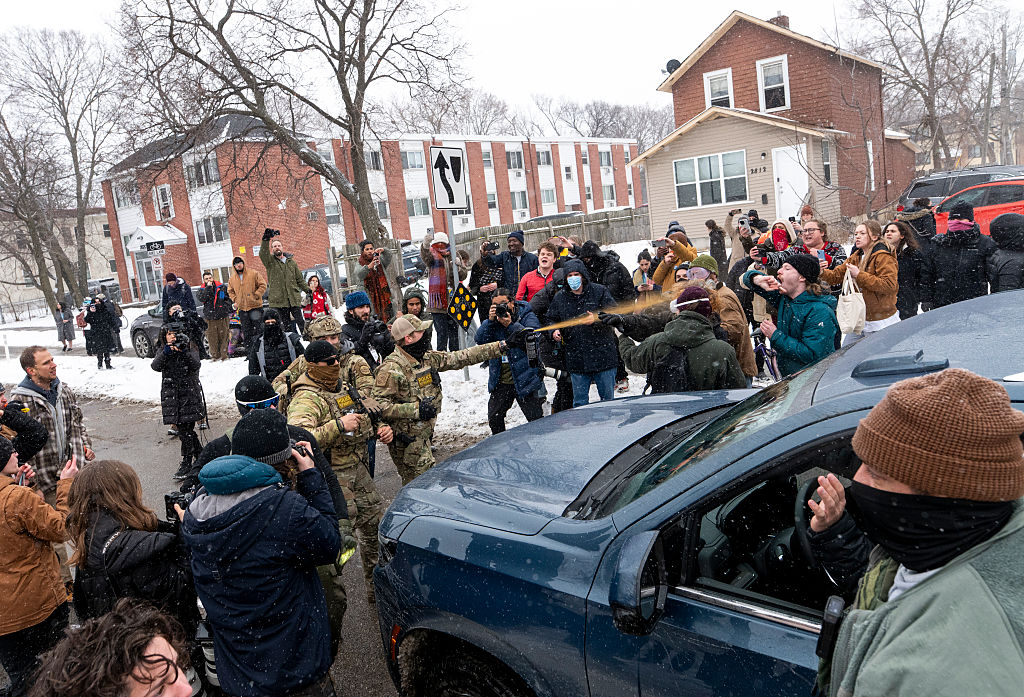
After an initially muted response to the immigration crackdowns in Minneapolis, the Jewish communal world is increasingly voicing its opposition to the police violence that has been seen in the state and to the Trump administration’s raids in general.
Though some progressive Jewish groups immediately condemned the actions of Immigration and Customs Enforcement after an agent shot and killed Renee Good during a protest two weeks ago, most Jewish communal organizations initially refrained from directly commenting on the matter. In recent days, as the raids have continued — and the number of casualties in them has risen — local and national organizations have begun issuing statements on the matter and opening up about their efforts on behalf of the state’s immigrant communities.
Late Monday, the Minnesota Jewish community issued a statement on behalf of more than two dozen Jewish organizations and synagogues of all denominations, raising deep concerns about the “current volatile situation throughout the Twin Cities and Minnesota,” noting that the crackdowns are directly affecting members of the Jewish community. And on Wednesday, the Reform, Conservative and Reconstructionist movements issued a joint statement condemning “in the strongest terms, the violence with which the Department of Homeland Security is enforcing American immigration law.” In conversations with eJewishPhilanthropy, local and
national Jewish leaders stressed that this is not simply a debate about immigration, but an issue of the use of state violence against immigrants and citizens alike. More on this below.
The current Jewish communal response to the federal government’s immigration policies and enforcement tactics stands in contrast to the Jewish community’s reactions to the first Trump administration’s efforts, particularly its so-called “Muslim ban” in 2017, which mainstream Jewish organizations swiftly, forcefully and publicly opposed. This shift appears to reflect the major changes that the American Jewish community has undergone since then, particularly in the wake of the Oct. 7 terror attacks and the rise in global antisemitism that followed during Israel’s ensuing war in Gaza. In that time, the Jewish community has broadly adopted new priorities, adjusted alliances — after being disappointed by some former partners’ reactions, or lack thereof, to the Oct. 7 attacks — and changed its advocacy tactics, as it grapples with a new reality in which communal security is a top issue.
Indeed, Good was killed as the Jewish community was still reeling from the deadly terror attack in Sydney, Australia, and days later, the Jewish communal world’s attention was drawn to the arson fire at a Jackson, Miss., synagogue.
Since Oct. 7, many mainstream Jewish organizations have de-emphasized immigration advocacy, David Bernstein, the founder and CEO of North American Values Institute and the head of the Jewish Council for Public Affairs from 2016-2021, told eJP. This is part of a de-emphasis of domestic policy in general. “They worry that if they play out their domestic concerns, they may lose influence on their foreign policy concerns or their core concerns around Jewish security and national security,” he said, especially when Iran and Israel are at the forefront of their minds.
Amy Spitalnick, CEO of the Jewish Council for Public Affairs, also acknowledged that there has been a shift in Jewish communal politics over the years, but advocated a return to those values. Speaking out against the force that ICE is using “is precisely the sort of position that was considered consensus in our community five, eight years ago,” she said. “None of this should feel new or a shift for the community. It's more, ‘How do we remind people this is where we've always been in our values?’”
Read the rest of ‘What You Should Know’ here. |
|
|
Minn. Jewish community warns of ‘volatile situation’ as ICE raids, protests rock state |
While for much of the American Jewish community the often-violent immigration raids in Minnesota and protests against them have played out on televisions and cellphone screens in recent weeks, the Immigration and Customs Enforcement operations in the state have had a direct, major impact on the lives of many in the local Jewish community, James Cohen, CEO of the Minneapolis Jewish Federation, told eJewishPhilanthropy’s Jay Deitcher. The turmoil in Minnesota is expected to escalate on Friday as Minneapolis labor unions, community leaders and faith groups are organizing an “ICE Out of
Minnesota" protest in the state, with demonstrations planned and local businesses set to close.
Rising risks: Minneapolis “feels otherworldly” because of the raids, David Locketz, rabbi at the Reform Bet Shalom Congregation in the Minneapolis suburb of Minnetonka and co-chair of the Minnesota Rabbinical Association, told eJP. Many businesses have been shuttered for over a week because employees are frightened. At stores and restaurants that are open, customers sometimes need permission to enter, as owners don’t trust people filtering in and out freely, he said. Cohen added that Jewish organizations, including synagogue preschools, Jewish family and children’s services and the local Jewish nursing home, are increasingly finding themselves short-staffed as employees are staying home. “There are many seniors who are without their health care provider because [their carer is] afraid to come to work.” As the situation escalates, “the risks to everybody in Minnesota just grow substantially,” he said.
Read the full report here. |
|
|
Azrieli Foundation undergoes ‘leadership evolution,’ bringing in outside CEO, expanding chair’s role
|
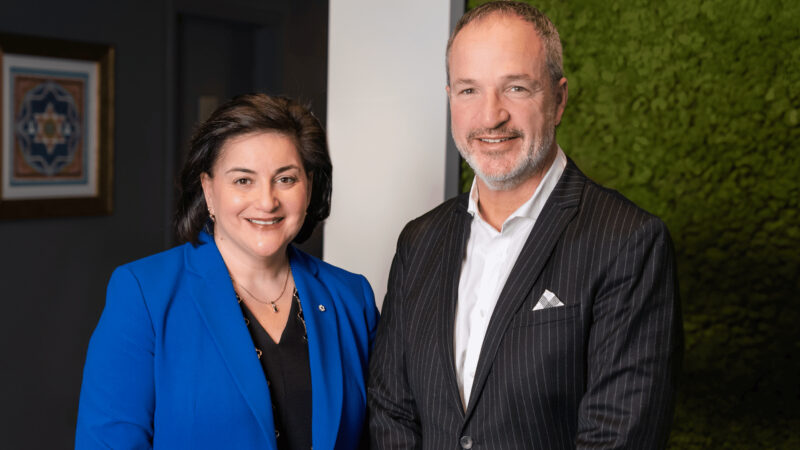
In 1989, architect and real estate developer David J. Azrieli established the Azrieli Foundation to fulfill his philanthropic vision of funding initiatives in key areas, including the Jewish community, medical research, arts and culture and Holocaust education. Twenty-seven years later, the organization is now Canada’s largest non-corporate public foundation, surpassing $1 billion in charitable contributions, roughly one-third of which was disbursed in the past two years. In light of this recent growth, the foundation is undergoing a “leadership evolution,” bringing on board its first CEO from outside of the family, former business executive André Beaulieu, and creating a new expanded board chair position for Naomi Azrieli, who has led the foundation for nearly 20 years, reports eJewishPhilanthropy’s Nira Dayanim.
Next steps: After nearly 20 years as CEO, longtime leader Naomi Azrieli, David Azrieli’s daughter, will retain her position as the foundation’s chair, albeit with greater responsibilities. As chair, Azrieli told eJP that she plans to focus on opportunities for thought leadership and “shaping the foundation’s mission,” and strategic priorities. “I think it's absolutely the right time in terms of the scale and scope of what we're doing,” Azrieli said. According to Beaulieu, in the next five to six years, the foundation plans to disburse another $1 billion. As the foundation continues to scale, streamlining its operations will become more of a priority, he said, adding that he plans to bring a “business management method” to philanthropic work.
Read the full report here. |
|
|
On Marion Wiesel’s first yahrzeit, follow her example with a mitzvah |
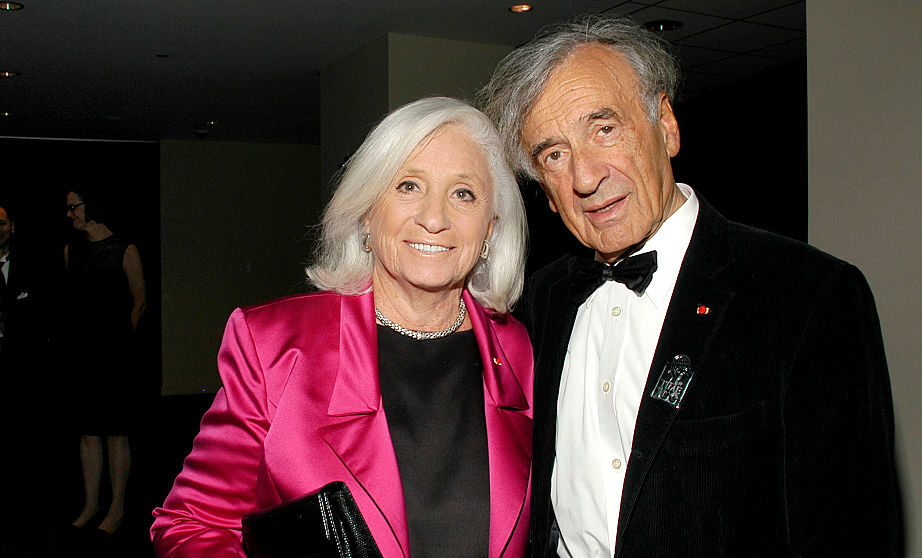
“Today marks the first yahrzeit of Marion Wiesel, one of the world’s most prominent Holocaust survivors and a tireless advocate for Holocaust memory. Her story is not as well-known as that of her husband, Elie Wiesel. However, as he noted, one cannot tell his story without hers,” writes Mike Igel, chair of the Florida Holocaust Museum’s Wiesel Archive and Legacy Council, in an opinion piece for eJewishPhilanthropy.
A driving force: “If you’ve read Elie Wiesel’s most famous books — Night, The Trial of God, All Rivers Run to the Sea — you’ve benefitted from Marion’s work. She translated 18 of her husband’s books, plays and other writings, which he preferred to pen in French or Yiddish, into English, making them accessible for a global audience. … But Marion’s work was by no means limited to supporting her husband’s writing. After he won the Nobel Peace Prize in 1986, the couple used the prize money to co-found the Elie Wiesel Foundation for Humanity, where Marion served as vice president and the organization’s driving force.”
Read the full piece here. |
|
|
What the war in Ukraine is teaching Jewish philanthropy about sustained care |
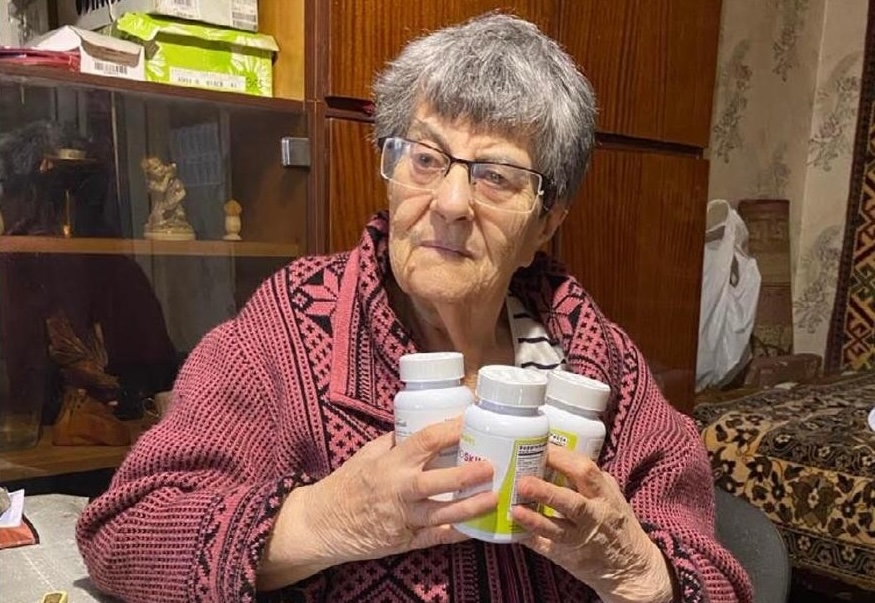
“As we navigate overlapping global and communal challenges, Ukraine… reminds us that philanthropic success is not measured only by how quickly we respond to emergencies, but by how thoughtfully we sustain care once urgency fades,” writes Debbie Kardon, executive director of Action for Post-Soviet Jewry, in an opinion piece for eJewishPhilanthropy. “The question before us is not whether we can afford to stay engaged, but what kind of philanthropic ecosystem we want to build when crisis becomes the long horizon rather than the passing storm.”
A combined effort: “Large institutions play an indispensable role in Jewish philanthropy. They bring scale, visibility, infrastructure and long-term stability. They convene partners, mobilize significant capital and anchor communal response. But prolonged crises also require nimble, relationship-based organizations. Often, small legacy groups like Action-PSJ, with decades of local trust, cultural fluency and the ability to pivot quickly as conditions change, are embedded in daily realities and can tailor responses in real time, especially when standard delivery mechanisms falter.”
Read the full piece here. |
|
|
Holocaust Education 2.0: In The Conversation, Chad Gibbs explores approaches to continuing Holocaust education after there are no more living witnesses to share their testimony. “In classes on the Holocaust, I now use a set of letters sent by a family of Polish Jews to their relatives in Camden, South Carolina. The letters themselves are powerful sources demonstrating the increasing desperation… The important thing is to teach in ways that can break down the mental barriers created by time and space. It is indeed the same reason that the
Auschwitz-Birkenau State Museum created a traveling exhibit called ‘Auschwitz. Not Long Ago. Not Far Away.’” [TheConversation]
Elephant in the Room: In ARC Magazine, Shaul Magid analyzes three recently published essays on the current state of liberal Zionism: one by Rabbi Elliot Cosgrove of Park Avenue Synagogue in New York City in The Forward, and ones by Yehuda Kurtzer and Chaim Seidler-Feller of the Shalom Hartman Institute of North America in Sources. “I have described three different attempts to address the conspicuous erosion of the Zionist consensus from within: re-telling the mythic story better, with a small dose of empathy but no real revision; expanding the tent while guarding the borders, while also acknowledging the rupture; and resurrecting lost voices to rebuild a religious humanism from the trauma of a massacre, a humanism that
already faded (and perhaps failed) before October 7. What I see missing from all three is a deep reckoning with the destruction of Gaza and the toll that has taken on the liberal Zionist vision and on Israel as a country.” [ARCMagazine]
When It’s Time to Go: In The Times of Israel, Naomi Graetz draws lessons from this week’s Torah portion about what it takes to push people into tough but necessary transitions. “Parshat Bo is usually read as a story of power: God versus Pharaoh, miracles versus stubbornness, redemption versus slavery. … Traditionally, the plagues are understood as punishments meant to break Pharaoh’s will. But what if the plagues were also for the Israelites? If Pharaoh had let the people go immediately — after Moses’ first appearance — would they have gone? Would any of us have gone? Leaving slavery
is one thing; leaving the familiar is something else entirely. … Israel’s wandering in the wilderness is not romanticized. There are rebellions, regrets, longing for Egypt, forty years of wandering. Salvation is messy, unpredictable. But staying — staying until there is no choice — that is its own kind of slavery.” [TOI]
|
|
|
It doesn’t matter if you’re 28 or 78 — there is no better feeling than learning about topics you’re passionate about. Spertus Institute’s Jewish Studies programs offer flexible MA and doctoral programs for those seeking meaningful study in an accessible way. Learn more here.
|
Be featured: Email us to sponsor content with the eJP readership of your upcoming event, job opening or other communication. |
|
|
Organizers of the World Economic Forum are mulling moving the annual gathering to another venue, with interim Co-Chair Larry Fink arguing that the WEF should “start doing something new: showing up — and listening — in the places where the modern world is actually built”; among the places he suggested were Detroit and Dublin… The New York Times reports from the Los Angeles premiere of “Mel Brooks: The 99 Year Old Man!,” a two-part documentary about the legendary comedian and filmmaker…
The Treasury Department announced sanctions on six Gaza-based medical organizations the government said had ties to Hamas’ al-Qassam Brigades, as well as the Popular Conference for Palestinians Abroad, which the department said was “clandestinely controlled” by Hamas and had supported numerous flotillas attempting to reach Gaza…
The New York Times spotlights the relationship between New York City Mayor Zohran Mamdani and NYPD Commissioner Jessica Tisch, who hold differing views on policing and politics, as they work together in Mamdani’s first weeks in office…
The NYPD is investigating an incident in which more than 50 swastikas were graffitied on a playground in Gravesend Park, Brooklyn…
The Athletic profiles Portland Trail Blazers forward Deni Avdija, the Israeli basketball phenom who got his start playing for Maccabi Tel Aviv and is having his best season as a pro…
Legal historian Barbara Aronstein Black, who became the first woman to lead an Ivy League law school when she was named the head of Columbia Law School in 1986, died on Tuesday at 92… |
|
|
The Arthur M. Blank Family Foundation has awarded nearly $28 million to golf-related nonprofits: a $20 million grant to the TGR Foundation, which was started by Tiger Woods 30 years ago, and a $7.6 million grant over three years to the PGA of America’s Reach Foundation…
The A-Mark Foundation received a $10 million donation from its founder and board member, Steven C. Markoff, to further the organization’s support for investigative journalism… |
|
|
Rabbi Rachel Van Thyn has been named the next executive director of the Women’s Rabbinic Network…
Todd Young was named the next Southeast regional director of the Anti-Defamation League… |
|
|
COURTESY/MAGEN DAVID ADOM |
Five decommissioned Magen David Adom ambulances are transferred this week to Druze and Christian communities in southern Syria. Before being handed over, each of the five ambulances was equipped with medical gear for medics and physicians, which was provided by the International Fellowship of Christians and Jews, and the donation was facilitated by the Israeli military, MDA said. The transfer ceremony was led by Gil Moshkowitz (second from left), MDA’s deputy director of operations, and Safwan Marich (second from right), the head of IFCJ’s Emergency and Security Division, and other senior MDA officials.
|
|
|
Actor best known for his role as Harvey Specter on the USA Network series "Suits," he is the son of a rabbi, Gabriel Macht turns 54…
Nobel Prize laureate in chemistry in 2000, he is a professor emeritus at the University of California, Santa Barbara, Alan J. Heeger turns 90… Los Angeles resident, Ruth Lynn Kopelove Sobel… Managing director and founder of Brave Warrior Advisors, he is the son of Hall of Fame baseball star Hank Greenberg, Glenn H. Greenberg… Rabbi and leader who has served in New York, New Jersey and
California, Mark Samuel Hurvitz… Brooklyn-born conductor, who during his tenure as artistic director of the Kraków Philharmonic became friends with Pope John Paul II for whom he later conducted multiple Papal concerts, Gilbert Levine turns 78… Senior political law counsel and consultant at Akin Gump, Kenneth A. Gross turns 75… Founder and executive director of the Brooklyn-based
Bridge Multicultural and Advocacy Project, Mark Meyer Appel… Publisher at Chicago Public Square, Charlie Meyerson… Financial services attorney, Lisa Arlyn Lowe… Former director-general of the Israeli Defense Ministry, he is a retired major general in the IDF, Ehud "Udi" Adam
turns 68… Member of the Knesset for Likud, Katrin “Keti” Shitrit-Peretz turns 66… Deputy president of the Supreme Court of Israel, Noam Sohlberg turns 64… Michael S. Marquis… President of the World Jewish Restitution Organization, Gideon Taylor… American-Israeli composer, pianist and
music producer, Roy Zu-Arets turns 57… Play-by-play broadcaster for the Washington Commanders of the NFL, Bram Weinstein turns 53… Rabbi at the Midway Jewish Center in Syosset, N.Y., Joel Mark Levenson… Director of the Chabad House in Kathmandu, Nepal, Rabbi Yechezkel "Chezki" Lifshitz… Columnist for Ami Magazine, Yochonon Donn… CEO of Our Generation Speaks, Heidi Rosbe… Managing director at SKDKnickerbocker, Kendra Barkoff Lamy… Congress executive producer at Politico, Zachary Warmbrodt… Music composer and winner of two Academy Awards and two Grammys, Justin Hurwitz turns 41… Head of U.S. at Blue Laurel Advisors and of counsel at Grossman Young & Hammond, Mark Donig… NYC-based managing director at Politico, Jesse Shapiro… Business reporter for The Washington Post, she is also a professional balloon twister and was a 2018 contestant on “Jeopardy!,” Julie Zauzmer Weil… Israeli singer known as Netta, she was the winner of the 2018 Eurovision Song Contest in Lisbon, Portugal, Netta Barzilai turns 33… Actress, best known for her role as Nicky Reagan-Boyle in the CBS series “Blue Bloods,” Sami Gayle Klitzman turns 30… Jewish hockey player, he was a first-round pick of the New York Islanders in
2014, Josh Ho-Sang turns 30… Associate in the Chicago office of Applegate & Thorne-Thomsen, Matthew Lustbader...
|
|
|
|