Good Wednesday morning!
In today’s edition of Your Daily Phil, we cover this week’s mental health-focused ICAR Collective conference in Tel Aviv. We report on the international expansion of Jewish Kids Groups’ Jewish After School Accelerator program started in Atlanta to five new states plus Canada and on the hostage memoir that topped the 75th National Jewish Book Awards. We explore the increasingly common — and at-times antisemitic — use of the term “Epstein class” in response to the continued fallout from the release of the Epstein files. We feature an opinion piece by Rebecca Leeman highlighting the gap between interest and infrastructure for Jewish community-building in the workplace and one by Rabbi Joshua Cahan challenging educators and funders to
put more faith (and resources) into tefillah. Also in this issue: Eric H. Yoffie, Jon Hornstein and Marlene Resnick.
Spread the word! Invite your friends to sign up.👇 |
|
| -
The International Federation of Social Workers is holding a vote today on whether to expel members of the Israeli Union of Social Workers, a day after the U.S.-based National Association of Social Workers came out against the move.
|
|
|
A QUICK WORD FROM EJP'S JUDAH ARI GROSS |
For the past two years, Israeli mental health professionals have been warning of an impending “tsunami” of psychological disorders as a result of both the traumatic events of the Oct. 7 terror attacks and the more than two years of war and prolonged stress that followed.
To address this, the Israeli government has allocated additional resources for public psychological services; existing mental health organizations have expanded their offerings; and a vast array of new organizations have cropped up across the country.
ICAR was co-founded by Gila Tolub, a former McKinsey consultant focused on women’s health, in the months after the Oct. 7 attacks with the goal of understanding and mapping this ecosystem of state-funded and philanthropy-backed services and initiatives. At the group’s conference this week at the Tel Aviv Expo Center, which was attended by representatives from a wide variety of organizations, for-profit companies and philanthropic foundations, ICAR sought to make sense of and advance the mental health field as it navigates this growing mental health crisis.
Speaking to eJewishPhilanthropy after the conference, Tolub said that ICAR, whose name is both an acronym standing for “Israel's Collective Action for Resilience” and the Hebrew word for “substance” or “main thing,” is still trying to serve its function as an umbrella organization, examining the entire mental health field, encouraging collaboration, encouraging best practices, connecting funders with nonprofits and more. Tolub said the organization sees itself filling a role that it believes that the Israeli government should ultimately be responsible for.
In a philanthropy roundtable discussion at the conference, donors and representatives of foundations expressed frustration at the lack of clarity in the field, not knowing what is already out there and functioning — and what’s falling through the cracks. They also raised concerns about how the organizations that sprang up post-Oct. 7 are maturing. Many of the groups were launched by family members of those killed in the attacks or in the war or by other well-meaning people, who may have a great concept but do not have the experience and training needed to build a sustainable organization. (In total, more than 50 philanthropists attended this week’s conference, according to Tolub, which shows that this is still an area of interest for many grantmakers.)
One of the main issues that ICAR has identified is this multiplicity of organizations and initiatives that have emerged over the past two years, along with a growing number of people needing help. Not all of those groups and programs are providing the same level of care and support, and people in need may not be able to find the best option for them given the sheer number of options available. Funders similarly may not know which organizations to support. Add to that the fact that many patients require support from multiple places, some of them managed by the state and others by nonprofits, who do not always know how to communicate with one another. Ultimately, this ends with an ineffective, uncoordinated mishmash of treatments and programs — and a lot of people not getting the help that they and Israeli society need.
Tolub said that ICAR also encourages organizations to track their progress, particularly if they want to eventually receive government funding or recognition from the country’s health care providers. ICAR also created a list of recommendations for would-be funders to ensure that the organizations that they are supporting are meeting basic standards. “We don’t want to be a regulator, but we want to tell funders, ‘Here’s what you should be asking,’” Tolub said. Both Tolub and Silverman recognized that ICAR’s goals are lofty, but said that while nonprofits can be competitive with one another for philanthropic and governmental funding, there is a growing recognition in the field that no one organization can address the country’s mental health needs. “We’ll never know if we don’t try it,” Tolub said.
Read the rest of ‘What You Should Know’ here. |
|
|
With 4th cohort, Atlanta’s Jewish Kids Groups after-school program solidifies North American expansion |
In the spring of 2023, Jewish Kids Groups, the Atlanta-based nonprofit that designs and implements Jewish after-school programming for elementary-aged children, took its first steps toward national expansion. Three years later, JKG has helped launch 20 new sites through its Jewish After School Accelerator program, which serve a total of 711 students. The latest cohort, announced last week, will add seven locations to that total beginning this fall, expanding the organization’s reach to Michigan, Florida, New York, California, Maryland and — for the first time — Canada, reports eJewishPhilanthropy’s Nira Dayanim.
Making it cool: The goal is to ultimately make the after-school model ubiquitous, Rachel Dobbs Schwartz, JKG’s chief innovation officer, told eJP. “That adjacency service of giving someone something that they need, something that maybe they don’t even know that they want, but they do, has been sort of the magic in many different Jewish spaces across the country,” she said. The Marcus Foundation has supported JKG since it launched as a local initiative in 2013 and continues to fund the group alongside other grantmakers, including the Dell Foundation, the Tepper Foundation and the Zalik Foundation. “It was obvious to Bernie [Marcus] that [JKG’s founder and CEO Ana Robbins] was right, that people don’t like Hebrew school for a lot of reasons, and if she could put ‘cool’ back into it, then we thought that was a good bet. And it was,” Jay Kaiman, the Marcus Foundation’s president, told eJP.
Read the full report here. |
|
|
Eli Sharabi’s memoir ‘Hostage’ tops 75th National Jewish Book Awards |
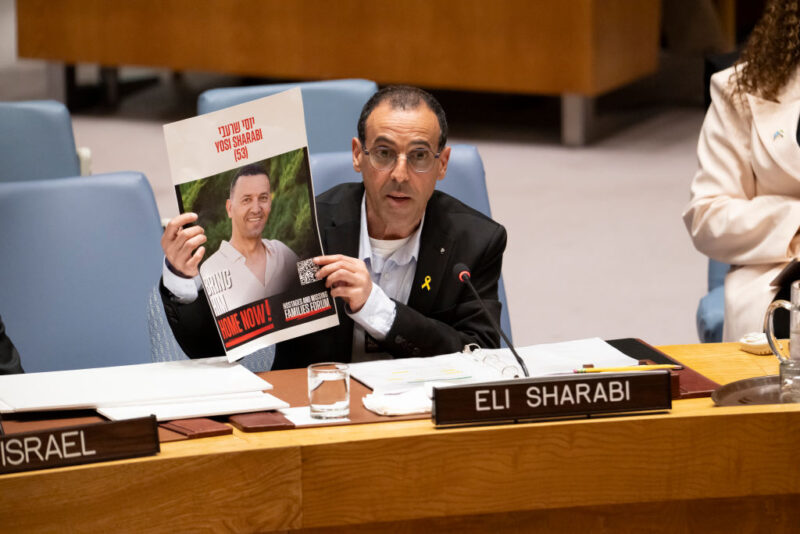
Eli Sharabi’s Hostage, a harrowing chronicle of his 491 days in Hamas captivity in Gaza following the Oct. 7 terror attack in which his wife and daughters were murdered, and a reminder of the resilience of the Jewish spirit, took home the National Jewish Book Award for book of the year, the Jewish Book Council told eJewishPhilanthropy’s Jay Deitcher ahead of the announcement today. Hostage shows the complexity a Jewish book can hold, Naomi Firestone-Teeter, CEO of JBC, told eJP. It doesn’t shy “away from trauma and the pain in our Jewish community and for [Sharabi] personally, but [it also is about] what it means to keep going,
what it means to continue to live and breathe and be a Jew moving forward, and the idea of resilience.”
Complicated times: In addition to Sharabi’s memoir being named the overall “book of the year,” in the contest’s 75th year, Sarah Hurwitz’s As A Jew won the top prize in the category of contemporary Jewish life and practice; Pamela Nadell’s Antisemitism, an American Tradition won for American Jewish studies; and Julia Ioffe’s Motherland won for autobiography and memoir. The remaining winners are listed on the JBC website. According to Firestone-Teeter, there is a “through line” in all of the books that have won prizes since the first award: They all grapple with “what it means to be a Jew in complicated times.”
Read the full report here. |
|
|
Anger at ‘Epstein class’ bleeds into conspiratorial finger-pointing |
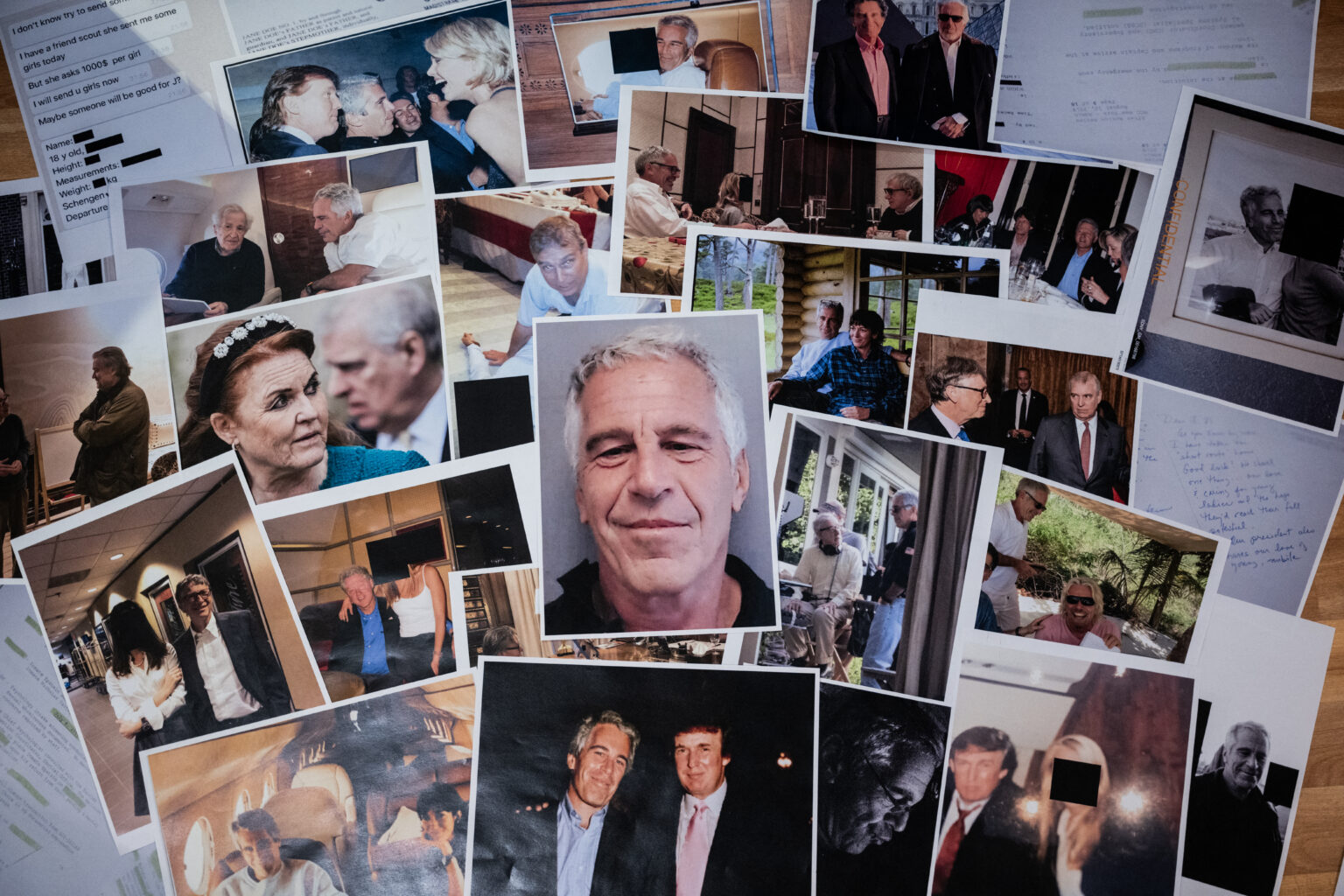
Since late last year, when the Justice Department began releasing millions of documents from its investigation into Jeffrey Epstein, the well-connected financier and sex trafficker, each day seems to bring news of yet another luminary who had a relationship with Epstein. The revelations of Epstein’s ties to elite power brokers on both the political left and right has contributed to a deepening conspiratorial mindset among the public, as people understandably question why influencers and titans of finance stayed in close touch with a man who had been convicted of sex crimes. But the legitimate outrage at the powerful people who ignored and at times enabled Epstein’s crimes has spread beyond just those who appear in the chummy emails he exchanged. It has now, in some corners, bled into conspiratorial finger-pointing on issues that have nothing to do with the ethical concerns raised in the document dump, reports Gabby Deutch for eJewishPhilathropy’s sister publication Jewish Insider.
Dog whistles: “Epstein class” is a moniker that confers guilt by association: Lots of wealthy people were connected to Epstein, and perhaps those individuals’ associates are at fault for Epstein’s sins, even if they were not themselves in the files. So what could “Epstein class” mean, then, but another euphemism for the shadowy group purportedly pulling the strings of foreign policy behind the scenes? Read the full report here and sign up for Jewish Insider’s Daily Kickoff here. Bonus: In Inside Philanthropy, founding Editor David Callahan criticizes the term “Epstein class,” for inaccurately implying collective guilt instead of shedding light on the systems that have enabled deviant behavior… |
|
|
Investing in Jewish life at work |
“Throughout the Jewish world in North America, we have built up resources to support Jewish life: curricula for Hebrew schools, speaker series for synagogues, professional networks for employees across communal institutions, even program ideas for young adult Shabbat dinners. There is a gap, however, between the efforts and the resources for Jews trying to build vibrant Jewish life in the workplace, as more and more young Jews are doing these days,” writes Rebecca Leeman, chief of staff at Clal – The National Jewish Center for Learning and Leadership, in an opinion piece for eJewishPhilanthropy.
Making it up as they go: “There are now over 180 Jewish ERGs [employee resource groups] at various companies, including Bloomberg, Deloitte, Netflix, Bank of America, Visa and universities like Harvard and Columbia University Medical Center, with 46% of that growth since Oct. 7, 2023. The leaders of these groups care deeply about building meaningful Jewish life at work, but they are doing so with far too little support. The commitment is there, but the infrastructure is not. … We must invest not only in programs but in the platforms that support those programs at scale. And we must recognize Jewish professionals as full participants in Jewish life who are building meaningful communities in their workplaces.”
Read the full piece here. |
|
|
FROM OBLIGATION TO OPPORTUNITY |
Jewish education needs tefillah |
“In the world of Jewish day schools and camps, the schedule almost always includes time set aside for tefillah (prayer). Yet few educators feel that we do tefillah well, or that our students find the experience engaging or meaningful,” writes Rabbi Joshua Cahan in an opinion piece for eJewishPhilanthropy. “Some have responded by giving ‘prayerfulness’ a very broad definition, expanding it to encompass many non-traditional activities that are spiritual or reflective. … These alternatives start from the premise that, for most students, traditional ritual is in essence unsalvageable. We can and must do more.”
A pedagogy of prayer: “Tefillah can be a key piece of our educational work: it can be a setting both to develop traditional skills and to use them to help us make meaning in our lives. It can nourish kids’ emotional and spiritual growth and can be a key component of the vital work of cultivating inner peace and strength. It can also shape their feelings about their overall school or camp experience and about Jewish practice more broadly in profoundly positive ways. But to get there, we need a serious push to develop and provide widely the training and resources schools and camps need. Once leaders believe that tefillah can be done well, they might invest real time and resources in thinking about how to get there. Then they can stop seeing their tefillah programs as limited to what has been and instead start asking what is possible.”
Read the full piece here. |
|
|
Partners in Remembrance: In The Times of Israel, Revital Yakin Krakovsky spotlights a group of Germans committed to standing publicly against Holocaust denial and antisemitism, even to the point of uncovering the roles their own family members played in the Nazi regime. “I recently attended the March of Life conference in Tübingen, Germany, a small university town that was a hotbed of Nazism 90 years ago. From this region came individuals responsible for the murder of more than 600,000 Jews during the Holocaust. … March of Life was founded in 2007 by Jobst and Charlotte Bittner, German Christians who felt compelled to confront the silence surrounding their
nation’s past, including their own family histories. For many participants, the discoveries are devastating. Some uncover SS affiliations. Others find documentation of participation in the Wehrmacht or the Einsatzgruppen units responsible for mass shootings. Their shame is real. The guilt is heavy. But what defines this movement is what comes next.” [TOI]
Learning Opportunity: In Haaretz, Eric H. Yoffie proposes a retro remedy for Jewish college students choosing to disengage from supporting Israel because they don’t feel knowledgeable enough to take a stand. “A good place to start would be with old-fashioned ‘teach-ins.’ In the late 1960s and early 1970s, as opposition to the Vietnam war surged across American campuses, anti-war students (and occasionally pro-war
students) organized sessions of student- and faculty-led lectures on the war's history and politics. I attended such sessions at Stanford and Brandeis and 50 years later, I still remember the seriousness of it all: contentious arguments, broad participation, in-depth discussions, and a tone of civility that prevailed from beginning to end. Frivolous arguments were dismissed, but most were serious indeed, guided by thoughtful student-faculty interaction. … Jewish students would benefit by creating communities of support, strengthening advocacy skills, and responding collectively to the most challenging arguments. The result would be a sophisticated educational experience on Israel — the kind Jewish students rarely receive and urgently need, especially now.” [Haaretz]
The Prove-You-Wrong Approach: In the Stanford Innovation Review, Tom Chi writes about the need to detox our informational environment. “For those who care about the health and governance of local and global communities, and who want the time they invest in collective issues to be as productive as possible, there is a simple check: notice whether the people around you are operating in a prove-you-wrong mindset or a build-forward mindset. Most complex problems cannot be solved in the abstract through discussion alone, prior to implementation. Real solutions require real-world trials, iteration, learning, and improvement. They require discovering which operational variables actually matter — variables that are usually
unknown at the start — so workable outcomes can emerge from experience.” [SSIR]
|
|
|
The future of Israel education is at the George Washington University
While The iCenter winds down, the George Washington University's Graduate Degree in Israel Education continues, as robust as ever. The only program of its kind, this hybrid degree provides the inspiration and strategies to ensure Israel is central to the landscape of Jewish education. All students receive generous merit scholarships. Applications close March 29: www.theicenter.org/GW.
|
Be featured: Email us to sponsor content with the eJP readership of your upcoming event, job opening or other communication. |
|
|
Jewish Insider examines a long-simmering controversy regarding circumcision in Belgium amid the prosecution of three Belgian mohels, which has sparked a public dispute between the United States ambassador to the country, the Belgian foreign minister and Belgium’s lone Orthodox lawmaker…
The New York Times spotlights Academies of Hope, a network of free private schools for war orphans and other children in the Gaza Strip, started by Palestinian American neurosurgeon Dr. David Hasan with funding from sources that include Jewish donors…
Legislation creating guidance to help schools identify antisemitic incidents passed in Missouri’s House of Representatives on Monday; the bill is sponsored by Republican Rep. George Hruza, the only Jewish member of the Missouri Legislature…
Jon Hornstein, managing director of national grantmaking at the Harry and Jeanette Weinberg Foundation, was named the winner of the Jewish Funders Network’s 2026 J.J. Greenberg Memorial Award; the award will be presented at JFN’s upcoming international conference in San Diego next month…
Thrive Capital founder Joshua Kushner announced that the firm was closing its 10th fund, with the majority of the more than $10 billion raised going to designated growth-stage investment…
A federal judge blocked the deportation of Columbia University graduate student Mohsen Mahdawi, who led anti-Israel protests at the university, citing a procedural misstep by federal attorneys who failed to certify a document that was to be used as evidence against Mahdawi…
Marlene Resnick, a longtime lay leader in Baltimore’s Jewish community, died at 89… |
|
|
The American Jewish Medical Association announced the appointment of Eveline Shekhman as CEO; Shekhman previously served as interim CEO of the organization…
Jewish Currents tapped former Forward reporter Joshua Nathan-Kazis to head its newly formed news desk; Nathan-Kazis will be writing a weekly newsletter… |
|
|
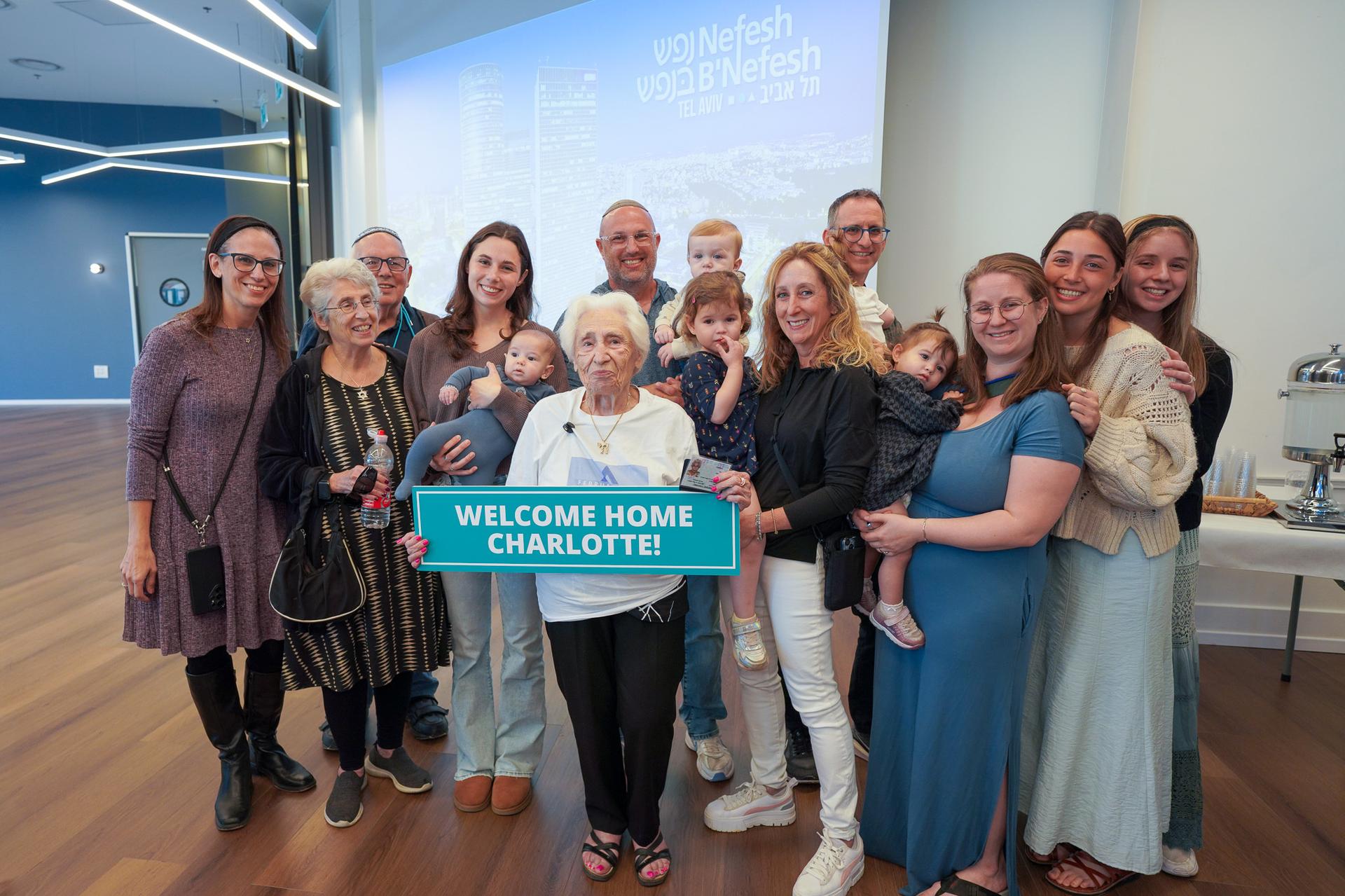
Charlotte Roth, 96, stands with some of her children, grandchildren, great-grandchildren and great-great-grandchildren earlier today after completing her aliyah process at the offices of Nefesh B’Nefesh in Jerusalem.
“It is a truly wonderful moment in my life to be able to call myself Israeli, a citizen of our Jewish state,” Roth, a Holocaust survivor, said in a statement. “Walking these streets with five generations of my family fills my heart with deep joy and strength, especially when I see Israeli soldiers and feel safety and pride where there was once fear.” |
|
|
LISA DRAGANI/GETTY IMAGES |
Singer-songwriter and pianist, Regina Spektor turns 46…
Rosh yeshiva at Yeshiva University, he also holds a Ph.D. in operations research from NYU, Rabbi Hershel Reichman turns 82… Former U.S. representative from New York for 32 years, he was chairman of the House Foreign Affairs Committee, Eliot Engel turns 79… Former national and Washington correspondent for The New York Times for 24 years, Michael Janofsky… Russian pharmaceutical businessman, Boris Spiegel turns 73… Principal at NYC-based Liebman Advisors, Scott Liebman… Israeli singer and actress, Ilana Avital turns 66… Portfolio manager at Capital Group, she holds a master’s degree in economics
from New York University, Hilda Lea Applbaum… Co-principal of the Institute for Wise Philanthropy, Mirele B. Goldsmith… Mayor of Miami Beach, Fla., from 2013-2017, Philip Louis Levine turns 64… National director
of events at the Simon Wiesenthal Center, Lori Tessel… Director of the digital diplomacy bureau at Israel's Ministry of Foreign Affairs, David Saranga turns 62… Author and school safety activist who had a daughter, Meadow, who was killed in the Marjory Stoneman Douglas High School shooting in 2018, Andrew Scot Pollack turns 60… Professor emeritus of the chemistry department at Stony Brook University, she was the
Democratic nominee in 2020 for the 1st Congressional District of New York, Nancy Sarah Goroff turns 58… President of Yeshiva University since 2017, Rabbi Ari Berman turns 56… CEO of an eponymous Baltimore-based branding, marketing, PR, advertising and design firm, David F. Warschawski turns 55… Fitness expert,
nutritionist, media personality and author, Jillian Michaels turns 52… Actor, comedian, writer, director and producer, Isaac "Ike" Barinholtz turns 49… Co-founder (with Dan Gilbert) of StockX, the stock market for high-end product resale, it started as a secondary market for sneaker sales, Joshua Eliot "Josh" Luber turns 48… Chief development officer for J Street, Adee Telem… Instagram celebrity, with 9.4 million followers, known commonly as The Fat Jewish, Josh Ostrovsky turns 44… President of baseball operations for the New York Mets, David Stearns turns 41… Editorial writer and opinion columnist for The Washington Post, James P. Hohmann… Deputy director of strategic planning at NYC's Housing Authority, Dylan Sandler… French movie actor, Esther Garrel turns 35… Producer and off-air reporter on Capitol Hill for NBC News, Rebecca R. Kaplan…
|
|
|
|