Good Thursday morning!
In today’s edition of Your Daily Phil, we consider the dearth of communal conversations about Les Wexner, despite him featuring prominently in the “Epstein files.” We interview the chief philanthropy officer at the Jewish Federation Bay Area about the organization’s recent donor-advised fund drive and spotlight an international Yiddish program that was held last week in Romania. We feature an opinion piece by Jeff Bicher responding to a campaign targeting Jewish camps in Canada over their support for Israel, and one by Rabbis Miriam Margles and Jonathan Kligler about cultivating a trauma-informed approach to Jewish leadership. Also in this issue: Zack Bodner,
Eran Shayshon and Roddie Edmonds.
Spread the word! Invite your friends to sign up.👇 |
|
| -
The Trump administration is convening its Board of Peace today in Washington.
- Jewish Federations of North America CEO Eric Fingerhut will deliver the inaugural “State of the Jewish Union” address at the organization’s Washington headquarters.
-
The Good People Fund is holding a celebration in Tel Aviv tonight marking the grantmaker’s 18th anniversary. If you’re there, say hi to eJP’s Judah Ari Gross.
|
|
|
A QUICK WORD WITH EJP'S JUDAH ARI GROSS |
House Democrats on the Oversight Committee trekked to central Ohio yesterday to depose Les Wexner, the retail magnate and philanthropist whose eponymous fellowships have been the lifeblood of the American Jewish communal world for decades. The questions, of course, focused on Wexner’s longtime relationship with disgraced financier and convicted child sex offender Jeffrey Epstein.
With the release of “the Epstein files” — millions of documents connected to Epstein, who was found dead in his prison cell in 2019 — his many high-profile associates and contacts have come under renewed public scrutiny, including Wexner, who maintained a yearslong relationship with Epstein. These newly released files have, in some cases, shed light on previously unknown ties between wealthy and powerful individuals and Epstein, such as Dr. Peter Attia and Thomas Pritzker. In other cases, the documents have revealed apparent illegal activities among Epstein’s known acquaintances, as seen today with the
arrest of the U.K.’s Andrew Mountbatten-Windsor, the former Prince Andrew, on suspicion of misconduct in public office in connection with his relationship with Epstein.
While Wexner’s name appears many times in the files, offering some additional details about their relationship — particularly its toxic end, when Wexner accused Epstein of stealing millions from him — the correspondence and documents that have come to light so far do not seem to significantly change what has been known for several years: Wexner maintained a close relationship with Epstein for many years, including when Epstein was allegedly involved in sex trafficking and other forms of abuse.
Wexner has repeatedly denied knowledge of Epstein’s predatory activities throughout those years. In a statement issued ahead of his deposition, Wexner — who has never been charged with any crimes connected to Epstein — again denied wrongdoing. “I was naive, foolish, and gullible to put any trust in Jeffrey Epstein. He was a con man. And while I was conned, I have done nothing wrong and have nothing to hide,” Wexner said, adding that he hoped to “set the record straight” about his relationship with Epstein.
The congressional deposition was held behind closed doors, but several of the representatives involved relayed a portion of what transpired in a press conference outside Wexner’s home in New Albany, Ohio. In general, they said, during the six-hour deposition, Wexner denied knowledge of Epstein’s nefarious activities and downplayed their personal relationship, despite having given Epstein power of attorney and appointing him to the board of the Wexner Foundation. The lawmakers responded to this with skepticism.
While Wexner is facing congressional scrutiny, there has been scant public discussion of his relationship with Epstein within the Jewish world. Some have ascribed this to communal reluctance to hold people in power to account, others imply a more conspiratorial tone of a coordinated campaign of silence. The far likelier truth is that the current lack of communal reckoning regarding Les Wexner’s relationship is because the reckoning already happened. In 2019, when Epstein was indicted for sex trafficking, the Jewish world — in public and private fora — held a rigorous debate about Les Wexner. At the end of it, some Wexner fellows disassociated from the foundation over his relationship with Epstein; others, after grappling with the issue, decided to continue participating in its robust and prominent alumni network.
The current debate over Epstein and his unsavory interactions with a myriad of wealthy and powerful men can, however, open the door to a broader discussion about the expectations that we have for our leaders and for the philanthropists whose fortunes make the Jewish world go round.
Read the rest of ‘What You Should Know’ here. |
|
|
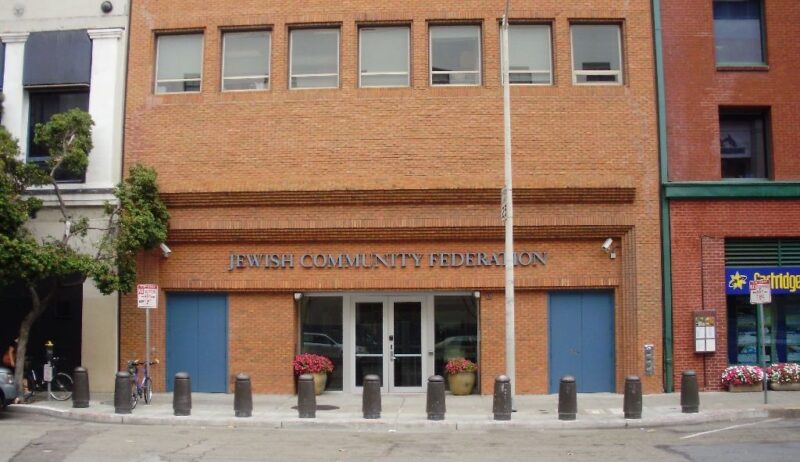
Jewish Federation Bay Area DAF drive ends with 200 new accounts, bringing in millions in new assets
|
Late last year, the Jewish Federation Bay Area launched a pilot program to encourage members of the community to open donor-advised funds. The promotion offered an $1,800 grant credit for anyone who opened a DAF with at least $10,000 and an $1,800 credit to anyone who referred a new DAF holder. The goal was to get 60 new donor-advised funds. When the campaign ended in mid-December, more than 200 people had opened DAFs — more than three times the number that the organization had hoped for and increasing its total number of DAFs by roughly 20%. The DAF push is part of the organization’s recent restructuring and refocusing, which it began rolling out last year. eJewishPhilanthropy’s Judah Ari Gross spoke with Rebecca Randall, the federation’s chief philanthropy officer, to hear more about the DAF push, how the federation attracted new donors and what other communities can learn from it.
JAG: What prompted this drive for donor-advised funds?
RR: Well, our federation has had DAFs for decades, and it is a growing part of our business and our overall revenue model, which then puts money back into the Jewish community. So it's a win-win because it really allows us to help guide and bring donors along, connecting them to federation priorities, but more importantly, to Jewish communal priorities. So it gives the donors themselves a tax-efficient vehicle for their giving and gives our advisors the opportunity to really make recommendations and suggestions about where there are needs in the community and the most amazing organizations that are working to help address those needs. So big picture, DAFs for us are nothing new.
We hold in total at the organization about $2.5 billion of assets under management, with the biggest amount coming from our donor-advised funds. And we now have, thanks to the promotion, over 1,250 donor-advised funds — 208 of which we opened during the four-month promotion period. Particularly after Oct. 7, 2023, we've seen, like everywhere else, an increase in the level of Jewish engagement, whether that is political, social or philanthropic, that we haven't really seen in decades. So I think that the moment was ripe for us to be able to do that.
Read the full interview here. |
|
|
Bar-Ilan and Babeș-Bolyai University gather over 70 ‘Yiddish hunters’ in Transylvania |
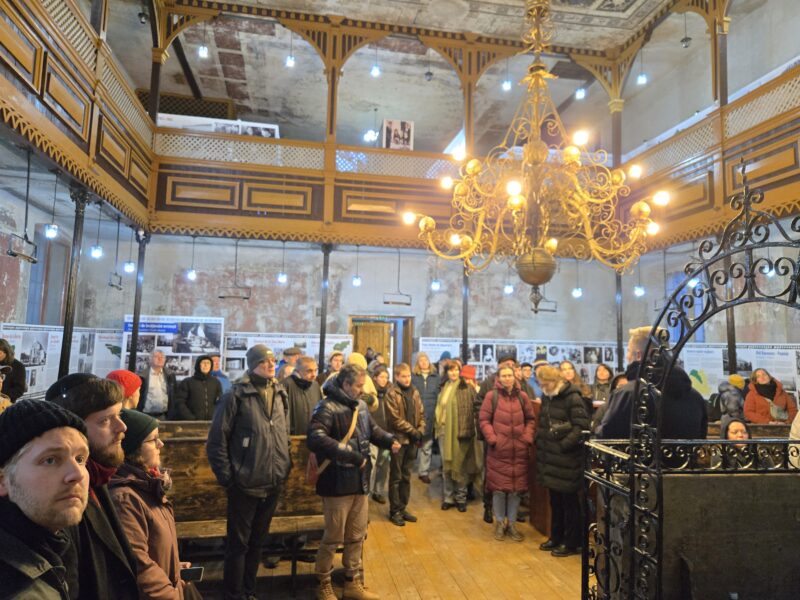
A hundred years ago, there was a saying that you could travel anywhere on the globe and find someone who speaks Yiddish. Today, there’s been a reversal — Yiddish enthusiasts pick a spot on the map and schlep across the world to find one another. Ber Kotlerman, Yiddish professor at Israel’s Bar-Ilan University, calls these aficionados “Yiddish hunters,” and last week, from Feb. 9-16, over 70 of them gathered for a free advanced Yiddish Winter School in Cluj-Napoca, Romania, in the Transylvania region, to immerse themselves in the language and culture they love, with every activity, from tours to lectures, taking place in Yiddish, reports eJewishPhilanthropy’s Jay Deitcher.
Sold out: Kotlerman, head of the Rena Costa Center for Yiddish Studies who also holds the Sznajderman Chair in Yiddish Culture and Hasidism at Bar-Ilan University’s Department of Literature of the Jewish People, connected with Augusta Costiuc-Radosav, assistant professor of Yiddish language and literature at the Babes-Bolyai University, and brainstormed the program in September. Neither anticipated more than 30 attendees, but over 100 people applied to attend, with 30 turned away due to language proficiency — attendees, often students and activists, had to breathe Yiddish. While there is a stereotype of Israelis thumbing their nose at Yiddish, seeing it as the language of the poor, weak shtetl Jew compared to the strong, powerful, Hebrew-speaking Israeli, that stereotype isn’t true, Michael Lukin, an Israeli-based Yiddish educator at Bar-Ilan University, told eJP. Many in Israel yearn for Yiddish, as evidenced by the oversubscribed winter
program.
Read the full report here. |
|
|
You don’t get to define me |
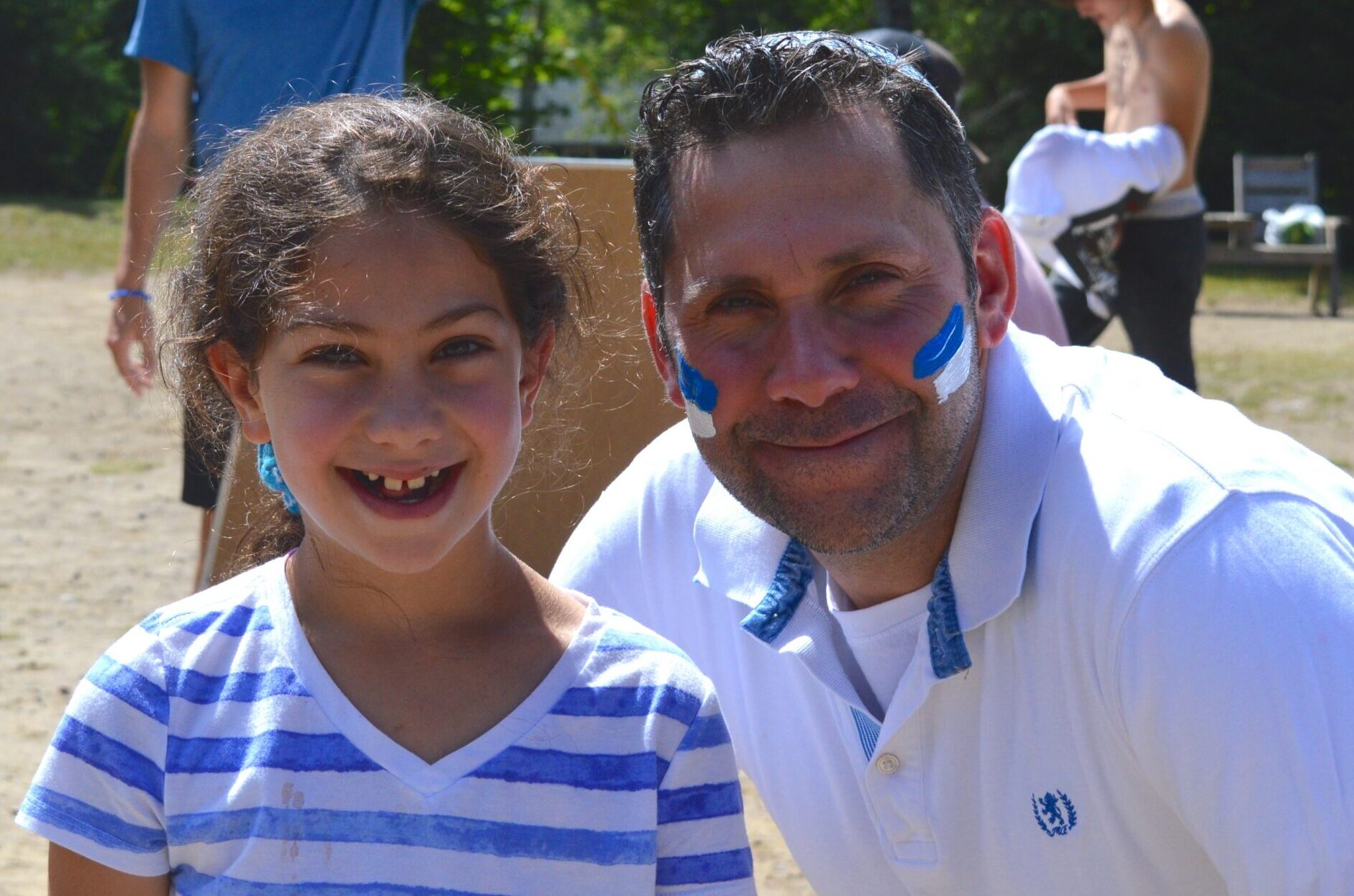
“A recent campaign has tried to get provincial camping associations in Canada to stop accrediting Jewish summer camps. ‘These camps are not problematic because they encourage connection to Jewish identity,’ the campaign pitch states. ‘Rather, they pose a problem because they encourage support for a genocidal, settler-colonial State.’ How? They employ IDF veterans, honor Yom HaZikaron and feature signage with messages like ‘I ♥️IDF.’ Seriously, these are their talking points,” writes Jeff Bicher, president and CEO of the Sylvan Adams Young Men and Young Women’s Hebrew Association (the JCC in Montreal), in an opinion piece for eJewishPhilanthropy.
Let’s be clear: “Our camps help strengthen Jewish identity, as the campaign suggests, and help campers, staff and their families further connect to the Jewish People. But this campaign’s sponsors attempt to define what Jewish identity is for our community. What right do they have to define any other group? Who are they to tell me who I am? … The Jewish identity that we are helping to foster very much includes Israel, the country that has the largest Jewish population in the world. … We convey that just like any other nationality that shares language, history, religion and culture, we have the right to self-determination. And just like any other people that is indigenous to a land, we have the right to our own liberation movement in that land.”
Read the full piece here. |
|
|
Beyond fight or flight: Building spiritual stamina in the face of antisemitism |
“In a time when antisemitism seeks to make us small, frightened and reactive, cultivating a clear mind and an open heart is a radical act. We have the choice, breath by breath, to respond not just with discipline, but with devotion to becoming ever wiser, more agile and better prepared,” write Rabbis Miriam Margles and Jonathan Kligler of the Institute for Jewish Spirituality in an opinion piece for eJewishPhilanthropy.
What’s missing: “While resources on combating antisemitism abound, not enough of them help leaders understand and address antisemitism’s internal impact on Jews: how centuries of systemic oppression have scarred us in ways that make us reactive, angry and fearful. This historic and ongoing persecution has primed Jews and Jewish communities to react to real or perceived threats out of ancestral trauma rather than respond with wise discernment. To lead effectively today, Jewish leaders need more than political strategy. We need safe spaces in which we can examine our fears, educate ourselves about the effects of trauma and receive spiritual and emotional support to lead with courage and clarity.”
Read the full piece here. |
|
|
Personal Growth. Professional Purpose.
M² Aleh Summit | April 28–30, 2026 | New Orleans Invest in the future of your organization and in strengthening the Jewish community.
Aleh is a three-day immersive summit for early-career professionals in practically any role at a Jewish communal organization, including fundraising, operations, communications, education, and more. Through dynamic learning, meaningful connection, and practical skill-building, participants expand their professional capacity and deepen their sense of purpose in the field.
Aleh is for anyone who is:
• Motivated to grow and committed to Jewish communal work
• Ready to ground their work more deeply in Jewish values and community
• Demonstrating strong professional promise Eager to build skills in engagement, programming, and stakeholder relationships
Aleh equips rising professionals with the tools, networks, and confidence to contribute at a higher level, now and for years to come. Nominate a promising team member or apply yourself to the M² Aleh Summit! |
|
|
Blame Game: In The Times of Israel, Zack Bodner challenges the assertion that Jewish legacy organizations are to blame for the “poisoning” of Zionism in the American Jewish mind. “When Jews line up at rallies to protest an Israeli leader’s speech in DC or a pro-Israel speaker at a synagogue or a conference on Israeli-American relations, younger Jews who have an affinity for Israel but may be upset with Israel’s current policies see anti-Zionists standing shoulder to shoulder with them. What is their take-away from this? Is it further clarity about Zionism or more confusing signals? … American
Jewish legacy organizations do disagree with Israel, but they do it as partners, working through differences in private. Sometimes our community gets the results we want, and sometimes we don’t — which is what partnership and compromise is all about. But these organizations don’t slam our partners in public; they don’t add fuel to the antisemitic fire; and they don’t confuse the term Zionism.” [TOI]
The ‘As a Jew’ Crew: In the Jewish Journal, Eran Shayshon observes a cherry-picking phenomenon among public figures and groups with an anti-Israel agenda. “When a
teachers’ union brings in Independent Jewish Voices — a group that actively campaigns for BDS and against the IHRA definition — to educate about Jew-hatred, that’s not inclusion. That’s institutional capture designed to ensure the next generation learns that boycotting only the Jewish state isn’t antisemitic. Jews have always served as fig leaves for anti-Israel campaigns — including self-described Holocaust survivors on Gaza flotillas. But this represents something new: systematic institutional deployment of fringe Jewish voices specifically to dismantle the legal and policy frameworks that protect Jewish students and communities.” [JewishJournal]
Creative Writing: In ARC Magazine, Mark Oppenheimer fact-checks a moment in a recent storyline in the HBO series “The Pitt” when a Jewish character says that the Muslim community raised money to pay for all of the funerals after the 2018 shooting at the Tree of Life synagogue. “If it’s not Hollywood’s job to teach history, even less to moralize about it, it can at least refrain from distorting the facts of a real-life event, especially one in recent memory, for added pathos. In a time of rising antisemitism, it is important to get the facts of Jewish history, and Jewish current events, correct. The Pitt is set in Pittsburgh, and in general, the writers work hard to
get the facts of Pittsburgh geography, history, houses of worship, and even culinary folkways correct. … It’s precisely that fidelity to the real Pittsburgh that could lead people to believe that Muslims paid for the funerals of all the Jews killed at Tree of Life. It sounds plausible (and is), and it is a comforting bit of lore. It gives us feel-good vibes: Jews die, Muslims step up. The problem is that history is complicated, and it’s not there for our comfort.” [ARCMagazine]
|
|
|
It doesn’t matter if you’re 28 or 78. There is no better feeling than learning about topics you’re passionate about. Spertus Institute’s Jewish Studies programs offer flexible MA and Doctoral programs for those seeking meaningful study in an accessible way. Learn more here.
|
Be featured: Email us to sponsor content with the eJP readership of your upcoming event, job opening or other communication. |
|
|
An effort to expel Israel from the leading global organization for social workers, the International Federation of Social Workers, failed yesterday in a closed-door Zoom meeting. A second vote, on suspending Israel, also failed, Jewish Insider’s Gabby Deutch reports…
A Tennessee man who saved more than 200 Jewish soldiers under his command at a Nazi POW camp in Germany will be posthumously awarded the Medal of Honor by the White House for his efforts; Roddie Edmonds, who was taken captive during the Battle of the Bulge, famously refused to identify Jewish troops when asked by the camp’s commandant, saying, “We are all Jews here”...
Israel Police detained Yochi Rappaport, CEO of Women of the Wall, and Tammy Gottlieb, vice chair of the organization’s board, for holding a Torah reading that allegedly blocked an emergency exit from the Western Wall complex after security guards prevented the group from doing so at the Western Wall; the kerfuffle came a day after Israel’s High Court of Justice held a hearing about the status of the Western Wall Compromise…
Laura Carolyn Schwartz Meier, a Portland, Ore.-based philanthropist and longtime donor to the city’s art museum, died on Feb. 3 at 98… |
|
|
Rabbi Diana Fersko announced that she is stepping down as senior rabbi of New York City’s Village Temple… |
|
|
YISROEL TEITELBAUM/ALEPH INSTITUTE |
More than 200 Jewish military chaplains, service members and military academy cadets attend the 19th annual five-day Aleph Military Symposium over the weekend in Surfside, Fla.
"Military life asks a tremendous amount of service members and their families," Rabbi Aaron Lipskar, Aleph Institute’s CEO, said in a statement. "Our annual symposium reflects our commitment to caring for the whole person behind the uniform. It strengthens service members and their families through meaningful Jewish connection and community, ensuring they never have to choose between their duty and their identity." |
|
|
KEVIN MAZUR/GETTY IMAGES FOR SIRIUSXM |
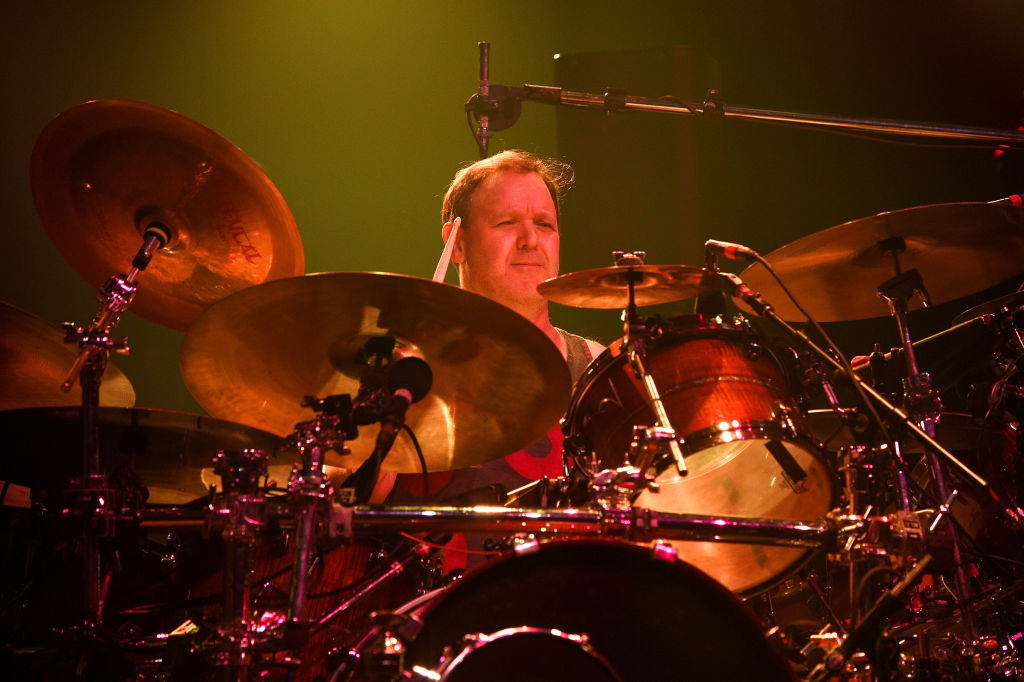
Co-founder of the band Phish where he is the lead drummer and frequent songwriter, Jon Fishman turns 61…
2004 Nobel Prize laureate in physics, he is a professor at the University of California, Santa Barbara, David Jonathan Gross turns 85… Former chairman of the board and CEO of Sony Corporation, chairman of the board of trustees of the American Film Institute, Sir Howard Stringer turns 84… Retired co-founder of integrated digital marketing agency Hawkeye / Mosaic, now known as Publicis Hawkeye, Sharon Edelman… President
of the Technion Israel Institute of Technology from 2009 until 2019, Peretz Lavie turns 77… Founder and president of the eponymous Laurie M. Tisch Illumination Fund, she is on the boards of the NFL's NY Giants, Lincoln Center for the Performing Arts and the Aspen Institute, Laurie M. Tisch… and also the birthday of her first cousin once removed, co-founder and CEO of Atria (a private medical institute in New York City), Alan
Tisch… Managing partner of Encino, Calif.-based Hager Pacific Properties, Adam Tuvia Milstein turns 74… Former Goldman Sachs partner and then a senior executive at JPMorgan Chase, he now serves on various corporate and non-profit boards, Barry L. Zubrow turns 73… International CEO of Taglit Birthright Israel since 2008, Gidi Mark turns
70… Novelist, essayist and short story writer, he was a winner of a 2005 MacArthur genius fellowship, Jonathan Allen Lethem turns 62… Retired U.S. district court judge, he was a law clerk for Supreme Court Justice Anthony Kennedy (1993-1994) alongside future justices Neil Gorsuch and Brett Kavanaugh, Gary Scott Feinerman turns 61… Senior vice president of government relations at Las Vegas Sands Corp., Andy Abboud… Communications director for 27 years for Sen. Lindsey Graham (R-SC), now a consultant, Kevin D. Bishop… Chairman of the World Zionist Organization, Yaakov Hagoel turns 55… Canadian media personality, conservative political activist, writer and broadcaster, Ezra Levant turns 54…
Partner at InfraStrategies and senior fellow at the UCLA Institute for Transportation Studies, Joshua Levi Schank, Ph.D.... Founder of The New York Times’ “DealBook” and co-creator of Showtime's "Billions," Andrew Ross Sorkin turns 49… Hollywood writer and producer, best known for “The Newsroom” (2012) and “Quantico” (2015), Gideon Yago turns 48… Jewish rapper, part of
the alternative hip hop group Darshan, better known by his stage name Eprhyme (pronounced "E-Prime"), Eden Daniel Pearlstein turns 46… Writer of the “In the Know” gossip column for The Hill newspaper in Washington, where she covers Congress, D.C.'s social scene, celebrities and politics, Judy Kurtz Altscher… Founder of a Middle East NGO, Regional Organization for Peace, Economics & Security (ROPES), Ben
Birnbaum… Former MLB pitcher for the Phillies (2011-2012), he now runs Big League Advance, a company that invests in minor league players in exchange for a percentage of their future MLB earnings, Michael Schwimer turns 40… Samantha Zalaznick… Tight end for the NFL's Kansas City Chiefs, he played college football at Harvard, Anthony Firkser turns 31… Daniel Blum… Actor who played the young autistic Jacob "Jake" Bohm in the Fox TV series "Touch," later portraying a young Bruce Wayne in another Fox series "Gotham," David Mazouz turns 25…
|
|
|
|

%20(1).jpg_01KHT447HWVKZ3F1VECCSSPQCM.jpeg)


_01KHV76A2N19BW6E4XJSSKKKN1.jpeg)