Good Monday morning!
In today’s edition of Your Daily Phil, we consider what the future holds after Israel and the United States launched airstrikes against the Iranian regime on Saturday. We interview the director of the Beit Shemesh municipal foundation after the city was hit yesterday by a deadly Iranian missile strike, and report on the Jewish communal world’s reactions to the military operation. We feature an opinion piece by Naomi Kovitz exploring tools for testing and improving institutional solutions, and one by Yossi Prager spotlighting a new Jewish Funders Network affinity group focused on Jewish education. Also in this issue: Mijal Bitton, Joshua J. Freundel and Stewart and Lynda Resnick.
Ed. note: The next edition of Your Daily Phil will arrive on Wednesday, March 4. Purim sameach! Spread the word! Invite your friends to sign up.👇 |
|
| -
We are closely monitoring the situation in Israel and the Middle East as the United States and Israeli continue conducting strikes on Iran, which is retaliating with missile and drone attacks.
- The J Street national conference continues today in Washington. More below.
-
Today also marks International Agunah Day, highlighting the many women who are “chained” in marriages to recalcitrant husbands who refuse to give them a religious divorce.
|
|
|
A QUICK WORD FROM EJP'S JUDAH ARI GROSS |
How long will it last?
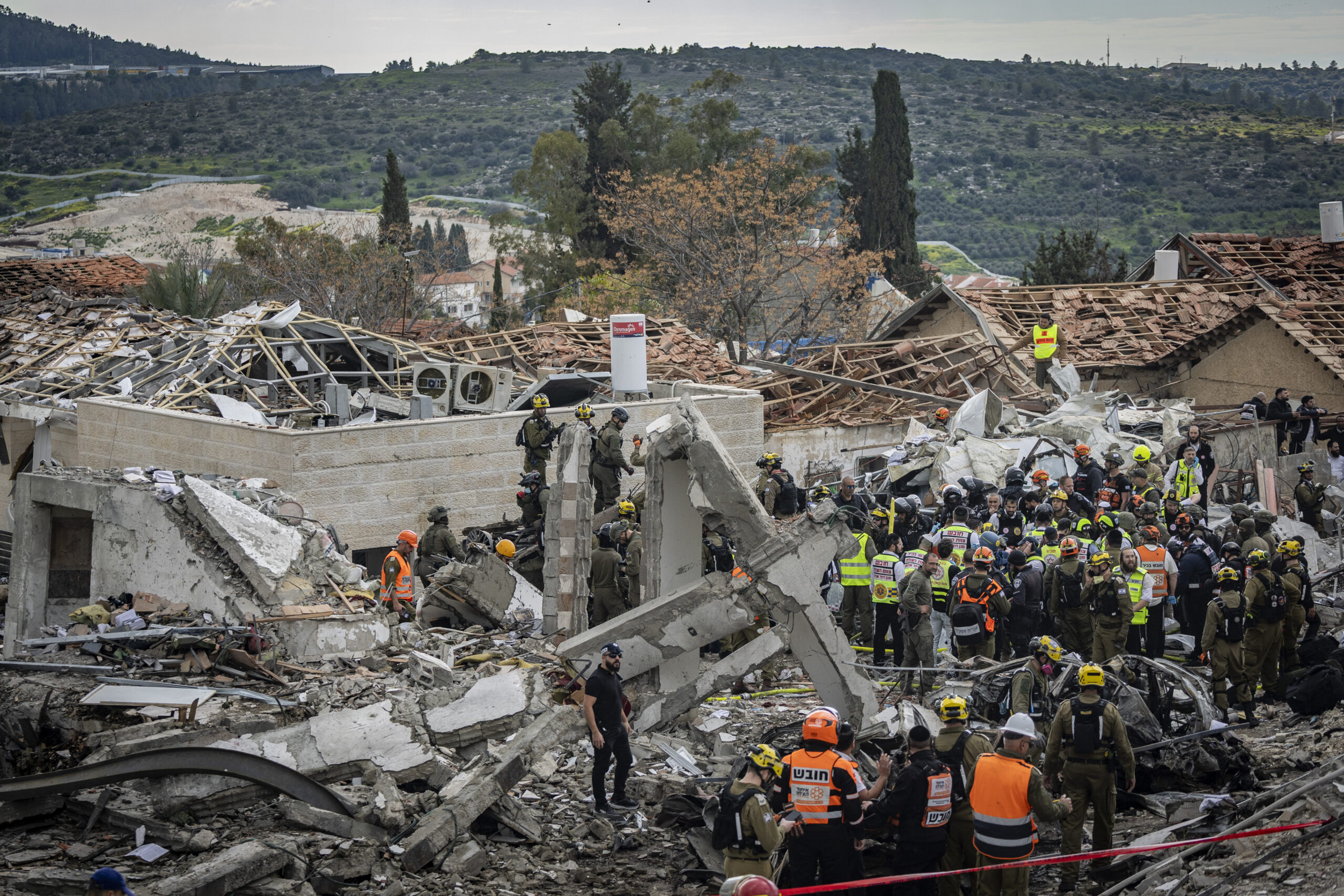
Perhaps more than any other, that is the main question as we enter the third day of what has quickly become a full-scale regional war, after the United States and Israel launched strikes on Iran’s top leaders, military sites and regime institutions. Tehran, in turn, has fired barrages of ballistic missiles at Israeli military and civilian targets, directly killing at least 11 people in Israel — nine of them in a single direct strike in the central city of Beit Shemesh — along with at least four American soldiers. Iran has also launched attacks on American allies throughout the Middle East. In the early hours of Monday morning, Lebanon’s Hezbollah terror group joined the fighting, firing multiple rockets at northern Israel.
The duration issue is a critical one as with each additional day, the costs of the war in both human life and in economic terms increases. As times goes on, additional Iranian proxies — beyond Hezbollah — may join the fighting. Diaspora Jewish groups have also warned of potential Iran-directed threats to Jewish communities around the world.
The renewed missile fire has again highlighted the shortage of bomb shelters in Israel. Roughly a fifth of all Israelis do not have access to any kind of bomb shelter, and another 30% must rely on larger communal shelters outside their homes, which can be impossible for people with disabilities or small children to reach in time. This issue is particularly acute in low-income households and, even more so, among Israel’s non-Jewish communities, where a lack of state funding, logistical challenges and, according to activists, government neglect have prevented the construction of communal fortified areas and the addition of fortified rooms in private homes.
Avi Weiss, American Israeli economist and president of the Israeli social policy-focused Taub Center think tank, noted yesterday that the 12-day Israel-Iran war in June directly cost the Israeli economy roughly $6.5 billion, along with another $1.5 billion-$3 billion more in damages caused by Iranian missiles, particularly to Beersheva’s Soroka Medical Center and Rehovot’s Weizmann Institute of Science. “It's reasonable to think that this might not be that different from then,” Weiss said, speaking in a web briefing organized by the Taub Center. “I can't know for sure that that's what's going to happen. We don't know how long this is going to last. We don't know how intense it's going to be, but it's not far off from what we expect might happen.”
American and Israeli officials have indicated both a willingness to continue the war for at least several weeks and a need for a thorough campaign, lest the fighting so far be for naught. In his briefing, Weiss largely refrained from prognosticating, but said that while the current war comes with considerable costs, if its aims are met, the benefits for Israel could be significant.
“Let’s take the optimistic view and say that as a result of what happens now, there'll be a regime change inside of Iran,” Weiss said. “It would affect the entire region. You could have an expansion of the Abraham Accords… that would obviously be huge for Israel. It would quiet things down, it would eventually allow [Israel] to lower the size of the army or expenditures on security. I don't know how long that would take, but it could happen.”
Read the rest of ‘What You Should Know’ here. |
|
|
Beit Shemesh fund offers aid to victims of deadly Iranian strike, aims to boost rescue teams |
Evading Israeli air defenses, the half-ton Iranian missile made a direct hit on a synagogue in Beit Shemesh, under which stood a bomb shelter where dozens of local residents had sought cover. The force of the blast destroyed the synagogue and collapsed the shelter's concrete roof, killing several of the people inside, as well as some who were still outside, rushing to safety. Nearly every city in Israel has a dedicated philanthropic foundation, through which donors can provide support for municipal programs and local initiatives. In Beit Shemesh, that foundation is Keren Shemesh, a Hebrew play on words that means both “Shemesh Foundation” and “Sunbeam.”
On Monday, some 24 hours after the missile strike, eJewishPhilanthropy’s Judah Ari Gross spoke with Raanan Eliaz, the executive director of the foundation, about the organization’s work and the community’s newfound needs in the wake of the deadly attack.
JAG: Tell me what role does Keren Shemesh have to play in a situation like this? What are the current needs of the community? RE: Keren Shemesh has donors from the federation system, primarily from the United States, but also from other Jewish communities around the world and inside Israel. We also have Christian donors. But our needs are greater than what we have right now. Our first and primary need is to provide immediate support to the families and children who are affected by this. Our secondary needs would be more long-term. There is a rescue unit in the city that needs equipment and training. There is also a longer need to maintain and upgrade the fortified facilities in the city. They are not all in the best shape, and we need to upgrade them, and that's bigger money and a longer-term project.
Read the full interview here. |
|
|
Jewish groups hail death of Khamenei, pledge solidarity with Israelis facing Iranian fire |
After the United States and Israel launched a joint strike on Iranian military infrastructure and leaders on Saturday morning, international Jewish organizations called for increased vigilance in Diaspora communities over fear of Iranian attacks on Jewish communities abroad and hailed the killing of Iranian Supreme Leader Ayatollah Ali Khamenei, noting his decades of support for terrorist organizations around the world. Jewish groups also expressed solidarity with the Israeli people over the weekend as Tehran began launching retaliatory missile barrages.
Mixed messages: “[Khamenei’s] death closes a chapter defined by sustained hostility and regional destabilization,” William Daroff and Betsy Berns Korn, the CEO and board chair of the Conference of Presidents of Major American Jewish Organizations, said in a statement. The World Jewish Congress and American Jewish Committee called for support for the Iranian people. A small number of
progressive Jewish groups, such as J Street and T’ruah, condemned the military campaign, describing it as “reckless.”
Read the full report here.
Bonus: Jewish Insider’s Gabby Deutch reports from J Street’s national conference, where some speakers broke from the organization’s criticism of the Iran strikes, including Union for Reform Judaism President Rabbi Rick Jacobs, who stressed that some “good, moral people” in the Jewish community agreed with the goals of the operation. |
|
|
Red teams, black hats and the 10th man |
“In many fields, leaders rely on structured methods to test and strengthen decisions,” writes Naomi Kovitz, COO of the Yael Foundation, in an opinion piece for eJewishPhilanthropy. “In boardrooms, the ‘10th man’ is assigned to challenge consensus and surface overlooked risks. In military planning, ‘red teams’ probe strategies for weak points and unintended consequences. In organizational and design thinking, Edward de Bono’s ‘black hat thinking’ requires a focused review of risk, feasibility and relevance before moving forward. Each approach examines a different vulnerability. Taken together, they improve judgment.”
For example: “Consider a board debating a major capital campaign to expand facilities. The proposal is compelling and momentum builds quickly. A designated ‘10th man’ would ask whether enrollment projections are conservative enough, whether faculty capacity can match physical growth, and whether investment in infrastructure risks underinvestment in teacher development or Judaic depth. Jewish communal organizations do not typically assign formal roles for structured dissent. Decision-making often relies on shared assumptions and internal trust. That approach can function smoothly in periods of stability. During times of rapid change, untested assumptions carry greater risk. The 10th man’s role is to strengthen the decision. By raising difficult questions early, the 10th man helps ensure that growth supports culture and that expansion reinforces belonging. Over time, this discipline builds stronger institutions and more resilient leadership.”
Read the full piece here. |
|
|
Bringing together funders with an affinity for education |
“Across the country, leaders in Jewish education are grappling with the structural pressures facing day schools. … Voices in the field have argued that sustainability depends on collaboration across institutions rather than parallel efforts that compete for the same families and donors,” writes Yossi Prager, in an opinion piece for eJewishPhilanthropy. “The recent unification of two major day schools in Philadelphia illustrates this shift (eJewishPhilanthropy, Feb. 26). Community leaders concluded that combining governance and infrastructure would strengthen academic quality and stabilize finances over time. That decision was shaped by local realities, yet it reflects a broader recognition that long-term viability increasingly depends on coordination at the community level.”
Ecosystem approach: “This is the animating vision behind the Jewish Funders Network’s new Jewish Day School Affinity Group. The group, which is beginning with 13 funders and foundations who bring experience across local and national day school efforts, offers a structured space for a wide range of funders, JFN members and beyond, to engage one another and potentially collaborate on the sector’s most pressing issues. … Jewish day schools play a unique and irreplaceable role in shaping committed Jewish leaders. With intentional alignment and disciplined partnership, philanthropy can help secure a strong and vibrant future for Jewish education and for the communities it sustains.”
Read the full piece here. |
|
|
A game-changing opportunity for neurodiverse and neurotypical neighbors to live, work, and thrive together
Cornerstone Housing’s Board of Directors is pleased to announce the March 2026 opening of its flagship project, the Bhatia Family Village, a pioneering independent living residential model that integrates people on the autism spectrum, as well as those with other learning and developmental differences, into the heart of the Los Angeles Jewish community.
The 64-unit building is designed to empower personal growth and independence for those living in the Village, while also fostering connection with the thriving Pico-Roberston community surrounding it. As the project’s CEO, Dr. Michael Held, says, “The Village will show us what is possible when disability inclusion is at the heart of city life. Interaction unlocks potential.”
The Bhatia Family Village works with ETTA, an organization with over 30 years of expertise developing and delivering services for neurodiverse individuals. At the Village, ETTA will provide a robust calendar of curated daily activities and regular outings for both neurotypical and neurodiverse adults in the spheres of arts and recreation, health and wellness, education and skill development, and Jewish culture and community.
Services and amenities in the beautifully designed building include extensive communal spaces, a health and wellness center, an organic garden, an art studio, a podcast studio, a rooftop deck and more. The $57 million project was financed with a combination of private philanthropy and public funding. All units are reserved, with occupancy to begin March 15, 2026. |
|
|
A Lesson for Our Times: In The Times of Israel, Mijal Bitton posits that Purim is “the holiday of the first October 8th Jews.” “Mordechai and Esther are the first biblically portrayed diaspora Jews who appear culturally integrated and only publicly assert their Jewish identity when threatened with annihilation. They are our original October 8th Jews. But the Megillah does not end there. And neither can we. Because the real legacy of Purim is not a formula for defeating antisemitism — and it is not a claim that we need antisemitism to awaken us. It is something more demanding and more generous: a blueprint for how to live Jewishly beyond Haman. The clearest evidence lies in what
Mordechai and Esther do, and do not do, once Haman is gone.” [TOI]
AI Questions Overlooked: In The Jewish Press, Joshua J. Freundel highlights ethical issues related to AI that he thinks Modern Orthodox thought leaders have yet to address. “It is not that all of these are problematic uses in and of
themselves, but that they are being done without any ex-ante reflection on whether they might be actively harmful, or whether they lock us into negative paradigms, or whether they simply do not align with Jewish ethics… whether we can accept the risks of a tool that is often wrong; whether we can disregard the enormous environmental damage done in growing and sustaining the use of AI; whether we should rely on a tool whose existence depends on the wholesale theft of others’ intellectual property.” [TheJewishPress]
As Billionaire’s Bolt: In The Wall Street Journal, Richard Florida explores the phenomenon of billionaires leaving the major cities they once called home. “The wealthy have long threatened to leave when battling local governments over taxes. In the past, they rarely did. But their threats have teeth this time — not because they are abandoning great cities, but because they have figured out they don’t have to. Now that digital technology allows them to separate where they live and pay taxes from where their businesses operate, they aren’t relocating their companies. They are relocating themselves. This upends the basic
arrangement that underwrote great cities — what they are, how they work and who pays for them.” [WSJ]
|
|
|
Are you a Jewish fundraising professional? Apply to a DLead cohort to connect with your peer circle. |
Be featured: Email us to sponsor content with the eJP readership of your upcoming event, job opening or other communication. |
|
|
Magen David Adom has opened several blood donation sites across Israel, as the country endures ongoing missile fire from Iran and Hezbollah…
The Canada Revenue Agency stripped the tax status of two more Israel-related nonprofits: The Canadian Zionist Cultural Association and Canada Charity Partners…
The Times of Israel interviews Deborah Benson-Ben Aderet, who survived the Sept. 11 terror attacks; July 4, 2022, mass shooting in Chicago; Oct. 7 terror attacks; and now finds herself stranded in Dubai, which was recently hit by an Iranian missile strike…
An artist has rented a truck to drive around displaying emails between Jeffrey Epstein and major art world figures and funders, including David A. Ross, Ronald Lauder and Leon Black, during a prominent independent art fair in Los Angeles…
J. The Jewish News of Northern California spotlights San Francisco State University’s Hillel, which has temporarily relocated while awaiting renovations, following an arson attack in December…
Singer and songwriter Neil Sedaka died on Friday at 86…
Iris Cantor, philanthropist, and renowned art collector, who donated roughly $500 million to support educational grants and core New York City art institutions, died on Sunday at 95…
A Sephardic Jew born to immigrant parents, Rebecca Benaroya, who donated $15 million to Benaroya Hall, home to the Seattle Symphony, died last Wednesday at 103…
Historian Donald Makovsky, the father of JINSA’s Michael Makovsky and The Washington Institute’s David Makovsky, died last week… |
|
|
Stewart and Lynda Resnick donated $100 million to UCLA for its mental and behavioral health services, including an expansion of its neuropsychiatric hospital, which is named for them… |
|
|
Simone Rodan-Benzaquen, formerly the head of the American Jewish Committee’s Europe operations, is joining the Foundation for Defense of Democracies as the think tank’s senior envoy to Europe… |
|
|
Students (left) from the Holon Institute of Technology outside Tel Aviv pose with Daniel, 3, whose wheelchair was turned into truck last week, and his parents, ahead of Purim, when people traditionally dress up in costumes. The Purim initiative, known as Dream Costumes, which was held in partnership with Beit Issie Shapiro, an Israeli nonprofit that supports people with disabilities, pairs design students with children who use wheelchairs and walkers to create customized costumes that integrate their mobility aids.
“Especially in these challenging days in Israel, continuing this Purim tradition feels more important than ever,” Beit Issie Shapiro Executive Director Ahmir Lerner said in a statement. “Our children and families have faced so much over the last two and a half years, and they deserve moments of pure joy. These custom-designed costumes don’t just make dreams come true — they celebrate each child’s uniqueness and show how inclusion, creativity and community can bring light and possibility, even in uncertain times.”
|
|
|
COURTESY/DAPHNE LAZAR-PRICE |
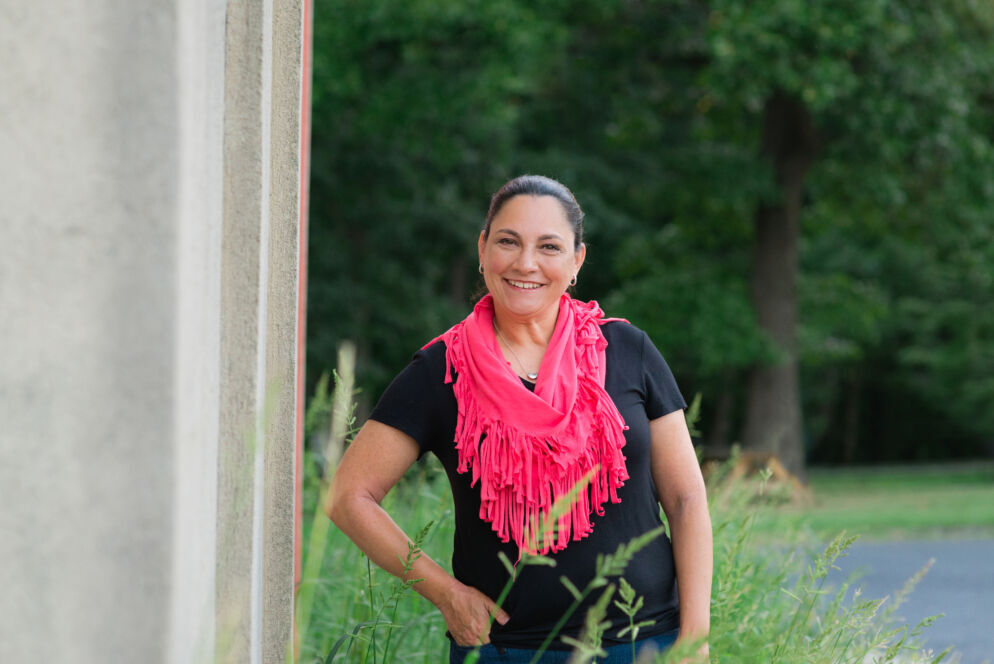
Executive director of the Jewish Orthodox Feminist Alliance, Daphne Lazar-Price…
Restaurateur, lawyer, financier and former owner of Braniff International Airlines, Jeffrey Chodorow turns 76… Comedian, actress and writer, she was part of the original cast of NBC's “Saturday Night Live,” Laraine Newman turns 74… Former U.S. senator from Wisconsin, Russ Feingold turns 73… Member of the Knesset for the National Unity Party, Alon Natan Schuster turns 69… Anesthesiologist in Skokie, Ill., Samuel M. Parnass, M.D.... Director of Judaism and Israel education at the Jewish Community Relations Council of Minnesota and the Dakotas, Sally G. Abrams… Member of the New York State Assembly, Alec Brook-Krasny turns 68… Consultant in public affairs, Mitch Bainwol turns 67… Author and reporter for The New York Times where she covers power players in New York City, Katherine "Katie" Rosman turns 54… Editor and director of communications at Twin Cities, Minnesota's TC Jewfolk (a Jewish news, events and culture online media hub), Lonny Goldsmith… Israeli hip-hop singer and rapper better known as Mooki, Daniel Neyburger turns 51… Former culture reporter for The New York Times, David L. Itzkoff turns 50… Former member of the Knesset for the Kadima party, Yuval Zellner turns 48… Director of marketing at Window
Nation, Eric Goldscher… Chief of staff for Rep. Maxwell Alejandro Frost (D-FL-10), Yuri Beckelman… Israeli journalist and radio newscaster, Dr. Hila Chaya Korach turns 42… Vice president at This Machine Filmworks in Los Angeles, Sally Rosen Phillips… Founding member of CoS Mastermind Network, a vetted community of chiefs of staff, Kaylee Berger Porco… Project manager at Halo Development, Donni Lurman...
|
|
|
|