Good Monday morning!
In today’s edition of Your Daily Phil, we examine three telling statistics ahead of tonight’s Yom HaShoah, Israel’s Holocaust Remembrance Day. We spotlight the post-Oct. 7 Simchat Torah Challenge, which has grown significantly since launching two years ago, and cover a new culinary experience, “Soul and Roll,” merging Jewish food and trauma. We feature an opinion piece by Todd Polikoff on the role of “planned abandonment” in institutional renewal and innovation, and a piece by Rabbi Sharon Cohen Anisfeld, Rabbi Daniel Berman, Judith Rosenbaum and Jordan Namerow highlighting their journey to a shared campus for their Boston-area organizations. Also in this issue:
Eli Kowaz, Andy Bryant and Fred Schoenfeld.
Spread the word! Invite your friends to sign up.👇 |
|
| -
Yom HaZikaron laShoah ve-laG'vurah (better known as Yom HaShoah), Israel’s Holocaust and Heroism Remembrance Day, begins at sunset. Communities in Israel will hold remembrance events, many of them modified in light of remaining security restrictions on large gatherings. In Jerusalem, Yad Vashem will air a prerecorded state ceremony that will include speeches from Israeli Prime Minister Benjamin Netanyahu and President Isaac Herzog.
-
Beginning today, the Claims Conference, in partnership with the Museum of Jewish Heritage – A Living Memorial, is hosting a weeklong Holocaust film series, with screenings throughout New York City, as well as Frankfurt and Berlin in Germany.
-
In Hungary, Péter Magyar’s center-right opposition Tisza party appears poised to secure a supermajority following Sunday’s elections, ousting Hungarian Prime Minister Viktor Orbán, who has led the Central European nation since 2010.
-
The family of former Rep. Eliot Engel (D-NY), who died on Friday, will be sitting shiva from 2 p.m. to 7 p.m. today and tomorrow in Riverdale, N.Y. See the obituary for the longtime New York congressman below.
|
|
|
A QUICK WORD WITH EJP'S JUDAH ARI GROSS |
Three numbers stand out as Israel prepares to mark Yom HaShoah: 109,000, 800,000 and 20.
According to the latest figures from Israel’s Holocaust Survivors’ Rights Authority, some 109,000 Holocaust survivors are currently living in Israel. Of these, roughly a third of them, 33,057, require income supplements from the government — a welfare benefit that is granted to ensure that they have the income needed for “minimal subsistence” — according to figures from the Welfare Ministry and Israel’s National Insurance Institute. This year’s Yom HaShoah comes at a particularly trying time for those 109,000 survivors in Israel, after a month and a half of war and bombardment. While this has at least temporarily subsided in light of the ceasefire with Iran, Hezbollah continues to launch rockets and drones at northern Israel, even as efforts are underway to negotiate an armistice of some kind.
In an indication of the persisting uncertainty in Israel ahead of Yom HaShoah, which is traditionally marked in the morning with a two-minute nationwide siren that calls Israelis to a halt, the Israel Defense Forces’ Home Front Command issued a public announcement today that should there be incoming attacks at that time, the constant sound of the memorial siren will be interrupted by the oscillating air-raid siren, instructing Israelis to immediately seek shelter.
Alongside the number of Holocaust survivors alive today in Israel, the country’s Central Bureau of Statistics released the latest estimates for the number of Jews alive around the world, 15.8 million, alongside the pre-Holocaust estimate, 16.6 million. More than 80 years after the end of the Holocaust, the global Jewish population today remains 800,000 lower than it was on the eve of World War II. The CBS data also highlight the current centrality of Israel for the Jewish People, with 45% of Jews living in Israel today, compared to 1945 when 3% of Jews lived in then-Palestine.
This morning, Tel Aviv University’s Center for the Study of Contemporary European Jewry and Irwin Cotler Institute released their annual report on worldwide antisemitism for 2025, finding that Jew hatred has remained elevated — and deadly — in the wake of the Oct. 7 terror attacks. Last year, 20 people were killed in four antisemitic attacks outside of Israel — the largest of these being December’s terror attack at Bondi Beach in Sydney, Australia — representing the deadliest year for non-Israeli Jewry since the 1994 AMIA bombing in Buenos Aires.
Looking forward, the report’s authors warned that antisemitic discourse is becoming increasingly commonplace in the United States, which they said is not only a problem in its own right, but a worrying sign of things to come. Last year, for instance, the annual report highlighted the “dire state of the fight against antisemitism in Australia,” months before the Bondi Beach shooting.
“This was no prophecy, nor a wild guess. Where minor attacks are dismissed, major ones will ultimately follow, in one way or another,” the authors wrote. “Rather than act in hindsight, other countries should learn from the mistakes of Australia and combat antisemitism decisively before tragedy befalls them.”
Read the rest of ‘What You Should Know’ here. |
|
|
Two years on, the post-Oct. 7 Simchat Torah Challenge not only survives but thrives |
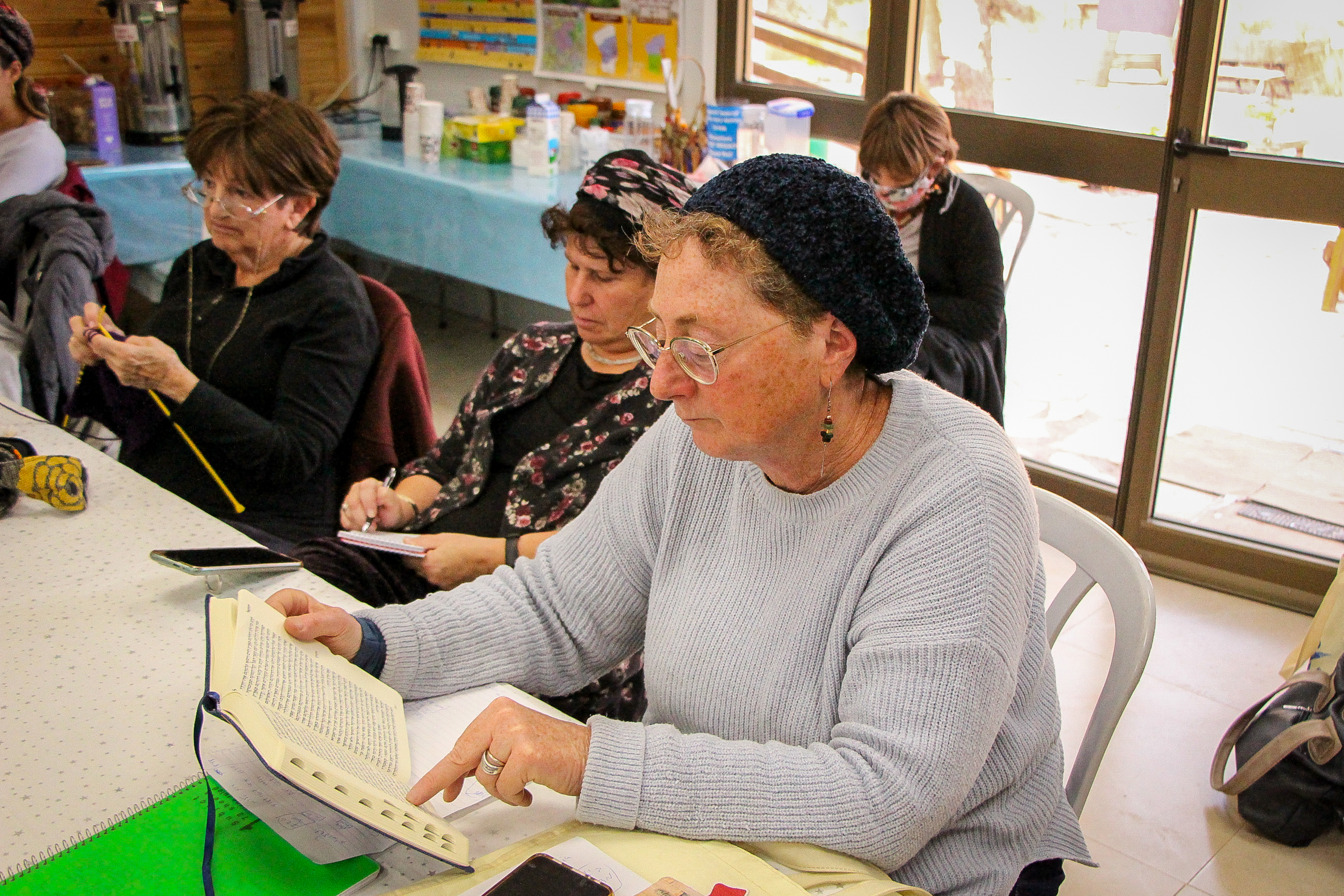
Two and a half years ago, news rumbled through the pews of American Jewish congregations of terrorists tearing through southern Israel on Simcha Torah in what would be the deadliest day for Jews since the Holocaust. Today, memories of first hearing about the Oct. 7 massacres still invoke horror, but at the same time, Jews across the world continue to turn to Simchat Torah for joy, marking the start of a new journey through the Torah, exemplified by the Simchat Torah Challenge, an initiative that emerged directly out of the tragedy of Oct. 7 and is not only continuing but thriving, reports eJewishPhilanthropy’s Jay
Deitcher.
A life of its own: The initiative began with partnership. Before launching, Tanya Singer, program director of the Simchat Torah Challenge, reached out to the connections she trusted: Sefaria, Chabad, Yeshiva University, Moishe House (now Mem Global), Hillel International, Tablet magazine and other Jewish organizations. Out of convenience, Tablet initially handled the project’s legal and finance services, but the initiative quickly “just sort of took on a life” of its own, Singer said. Today, the Simchat Torah Challenge functions as an LLC under the Margaret and Daniel Loeb Foundation and continues to welcome new partners and funders, a list which now includes Repair the World, BBYO, Jewish Funders Network and others.
Read the full report here. |
|
|
From trauma to table: An Israeli duo uses food therapy and song to foster connection
|
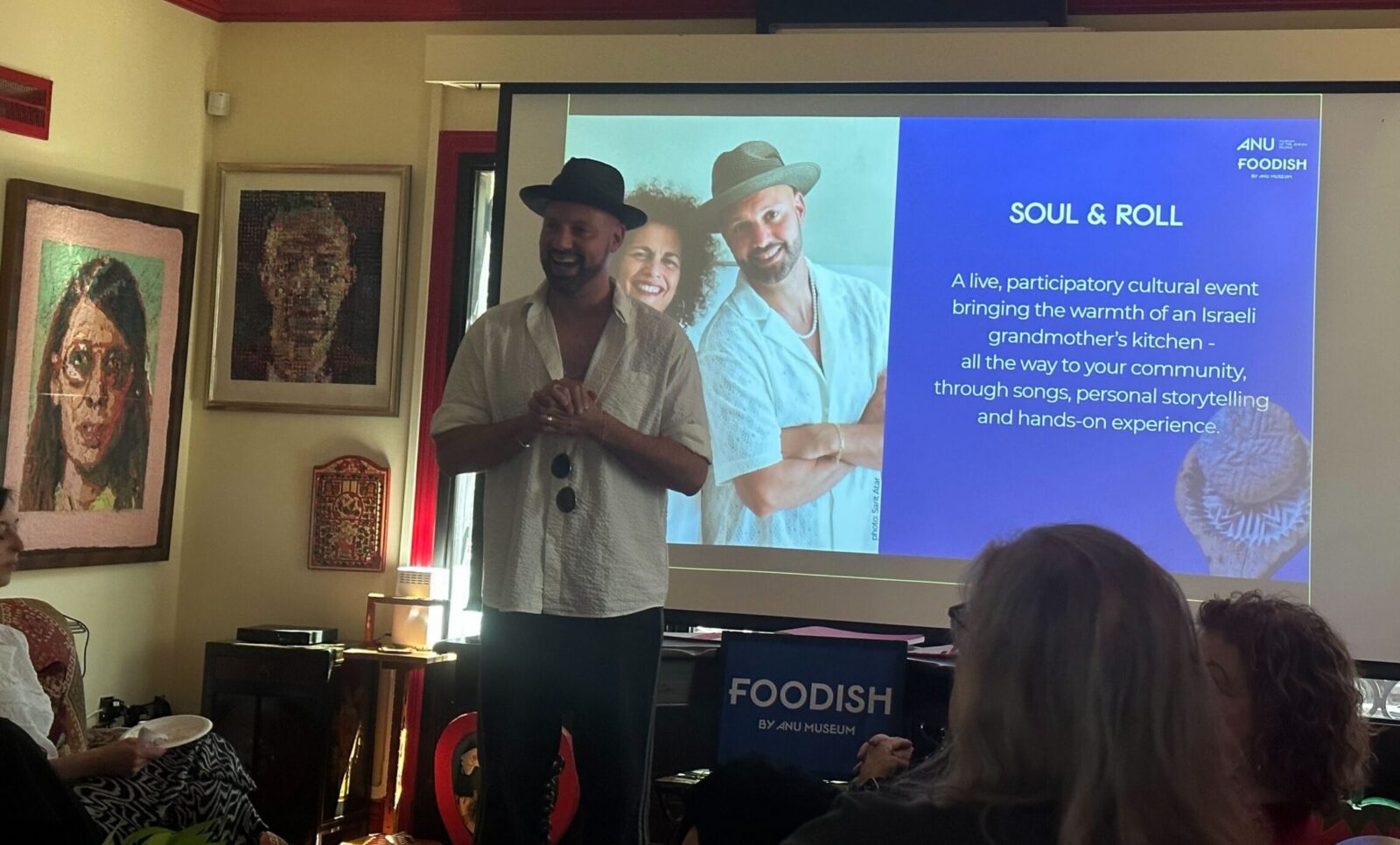
Israeli singer Hananel Edri discovered his love for food and his family’s Moroccan traditions in his grandmother’s kitchen, where he found solace after the trauma of a rocket strike on his family home in Kiryat Shmona, near Israel’s northern border with Lebanon, at age 10. Meanwhile, Merav Oren — founder and CEO of Foodish, the culinary department of Tel Aviv’s Anu Museum of the Jewish People — grew up between Atlanta and Israel, rooted in a different culinary tradition: Ashkenazi Jewish cuisine. This year, the two brought their worlds together to form “Soul and Roll,” a new immersive culinary and musical experience, reports Haley Cohen for
eJewishPhilanthropy’s sister publication Jewish Insider.
Cooking up connection: “We talk, Hananel sings and at the end people do a hands-on experience making ma’amoul,” a traditional Middle Eastern pastry often served at Mimouna, the Moroccan-Jewish celebration to mark the end of Passover, Oren told JI on Sunday at an event to launch Foodish’s international expansion. Held at the Washington home of documentary filmmaker Aviva Kempner, some two dozen attendees got a taste of a Soul and Roll show, including Edri’s rendition of “Jerusalem of Gold” and a Moroccan song dedicated to his grandmother, followed by a lesson in making date-filled ma’amoul pastries to bring home.
Read the full report here and sign up for Jewish Insider’s Daily Kickoff here. |
|
|
Shaking off the tyranny of the successful past |
“Management and leadership sage Peter Drucker believed that organizations carry the seeds of their own decline inside their greatest successes. The programs and structures that once transformed lives and matched communal growth. The service that once met a pressing need. These can, in time, all become the very obstacles to renewal. He called the discipline of addressing these obstacles ‘planned abandonment,’” writes Todd Polikoff, CEO of the Aaron Family JCC of Dallas, in an opinion piece for eJewishPhilanthropy.
Highly relevant: “Drucker’s observations on nonprofit strategy and leadership should stop every Jewish communal professional in their tracks. Most organizations spend most of their energy defending yesterday, not out of bad faith, but out of loyalty, habit and the very real sorrow of letting go of something that once mattered deeply… It is a failure of responsibility to the community we must serve today. Following Drucker’s logic, there is a need for a systematic review process that is adaptable directly to the rhythms of Jewish communal life.”
Read the full piece here. |
|
|
More than financially sensible: How a shared campus helps Jewish life flourish in Greater Boston |
“At a time when Jewish communities are asking urgent questions about belonging and relevance, the shared campus offers a compelling alternative to the merger model,” write Rabbi Sharon Cohen Anisfeld, president of Hebrew College; Rabbi Daniel Berman, senior rabbi of Temple Reyim; Judith Rosenbaum, CEO of the Jewish Women’s Archive; and Jordan Namerow, president of Mayyim Hayyim’s board of directors, in an opinion piece for eJewishPhilanthropy.
Better together: A case study focused on the effort of their Boston-area organizations (and a network of partners) to launch a shared campus in Newton, Mass., offers a roadmap for other communities and their institutions. “Activating a shared campus is not easy work. It demands time, trust and comfort with ambiguity; it also requires leaders to hold both autonomy and interdependence at the same time. But we believe our shared campus offers something increasingly rare: a way to build infrastructure for collective strength.”
Read the full piece here. |
|
|
Klein’s Blind Spot: On his Substack, “The Middle Ground,” Eli Kowaz rejects Ezra Klein’s recent opinion piece that argues for accepting figures like Hasan Piker, despite anti-Israel and antisemitic claims against him.
“Ezra Klein is right that anti-Zionism is no longer a fringe position. He’s wrong about why. His argument, stripped down, is that Israel made this happen. The occupation, Gaza, the settlements, the casualties — reasonable people drew reasonable conclusions. … For most of the people who hold anti-Zionist views today, the framework came first. Not as a response to Israeli conduct, but as a prior — built over decades in activist spaces, campus culture, and international institutions long before Gaza. … He is right that cancellation has failed. Where he goes wrong is in treating anti-Zionism as a political position that has simply matured into respectability. It hasn’t. It has found a permission structure in Israeli conduct, and a delivery mechanism in people like Piker, who decided the conclusion before examining the evidence.” [TheMiddleGround]
Never Underestimate Women: In The Conversation, Chad S.A. Gibbs explores why sexual violence and exploitation of Jewish women has been a less-discussed element of the horrors of the Holocaust — though that is changing — as well as the role of women in the resistance at camps like Treblinka. “At every turn, Jewish women and men held in this camp took advantage of the guards’ beliefs about women. Simply put, the German SS did not fear Jewish women, so guards did
not supervise them or scrutinize them as much as they did male prisoners. Women cleaned the SS barracks and used these jobs to keep track of the Germans’ comings and goings. They staffed the kitchens and, using the fact that they were not feared, hid stolen weapons there. German guards created a camp brothel at Treblinka where certain guards and senior prisoners were allowed to assault Jewish women. Again, the Nazis did not fear or suspect those they compelled to endure that place. However, the women held there stole as many as eight rifles from guards to arm the revolt.” [TheConversation]
Out of the Public Eye: In the Jewish Telegraphic Agency, Jason Plotkin, the executive director of Temple Israel outside Detroit, describes how the attack on his synagogue is still affecting his community a month on. “For many parents, the preschool’s closure from the moment our building was rammed by a truck on the afternoon of March 12 through our anticipated reopening off-site in the coming days has meant scrambling to figure out something no one planned for: a full month of unexpected childcare. … And yet amid that challenge, something beautiful has
happened. Businesses and community members stepped up. Playdates and functions were organized across the metro Detroit area. Families found ways to gather, to support one another, to create moments of community even when nothing felt normal. … And maybe that’s the story worth telling. Not just what happened that day, but what it means to live through the days after — and to keep showing up anyway.” [JTA]
|
|
|
Be featured: Email us to sponsor content with the eJP readership of your upcoming event, job opening or other communication. |
|
|
Israel’s Ministry of Finance projects the latest Iran war will cost the country $11.5 billion…
A new study by Tel Aviv’s Institute for National Security Studies finds that most Israelis oppose the current ceasefire with Iran and expect fighting to resume in the coming months…
Ahead of Yom HaShoah, the Israel-based initiative Zikaron BaSalon (Remembrance in the Living Room) is partnering with Israeli television provider HOT to stream survivor testimonies and Holocaust programming to Israeli households throughout the country…
Also timed to coincide with Yom HaShoah, Canadian children’s book author Kathy Kacer speaks with Canadian Jewish News about her newest book, Last Known Address: The Stumbling Stones of Europe…
Town & Country spotlights the book events being hosted at former New York City Mayor Michael Bloomberg’s Bloomberg Philanthropies headquarters, which has “become the place in New York to have a book party, one that regularly attracts power players simply by nature of the host”...
The Times of Israel spotlights the imminent "funding cliff" for over 1,200 elderly evacuees from northern Israel as the funding for the Tzalir Fund, which supports them, is set to dry up on April 15….
Israeli indie musician Noga Erez made history over the weekend as the first Israeli performer at Coachella…
The Chronicle of Philanthropy examines the intensifying debate surrounding the tax-exempt status of increasingly lucrative NCAA athletic departments…
Jewish Telegraphic Agency interviews Harrison Hochberg about his journey as the University of Michigan’s only Jewish basketball player, how he balances his Jewish identity and faith with competing at the highest level of the NCAA…
The Real Deal profiles real estate magnate Jeffrey Soffer, who developed his family’s Fontainebleau property into an empire…
The Times of Israel spotlights the symbolic and emotional demolition of homes in Kibbutz Be’eri destroyed during the Oct. 7 attacks…
Police in San Francisco arrested a 20-year-old man accused of throwing a Molotov cocktail at the home of OpenAI CEO Sam Altman…
The Stanford Social Innovation Review examines the efficacy of programs aimed at combating misinformation in India…
Former Rep. Eliot Engel (D-NY), who represented the Bronx and Westchester County in the House from 1988 to 2020 and served for years as the top Democrat on the House Foreign Affairs Committee, died Friday at 79, Jewish Insider’s Marc Rod reports… |
|
|
Maj. Gen. Roman Gofman’s appointment as the next director of the Mossad was approved on Sunday following a holdup from the Senior Appointments Advisory Committee…
New York Solidarity Network named Rachel Stortch as its first CEO; NYSN Board Chair Gary Ginsberg called Stortch, the COO of Fifth Avenue Synagogue and a former Missouri lawmaker, “a rare combination of electoral strategist and community builder”...
Andy Bryant is stepping down as executive director of the New Jersey-based Segal Family Foundation after over 16 years with the organization…
Former Masa CEO Liran Avisar Ben Horin was named to Naftali Bennett’s party list for the upcoming election…
Simon Happer was hired as the security chief of the Kansas City Jewish Community following over 35 years in law enforcement… |
|
|
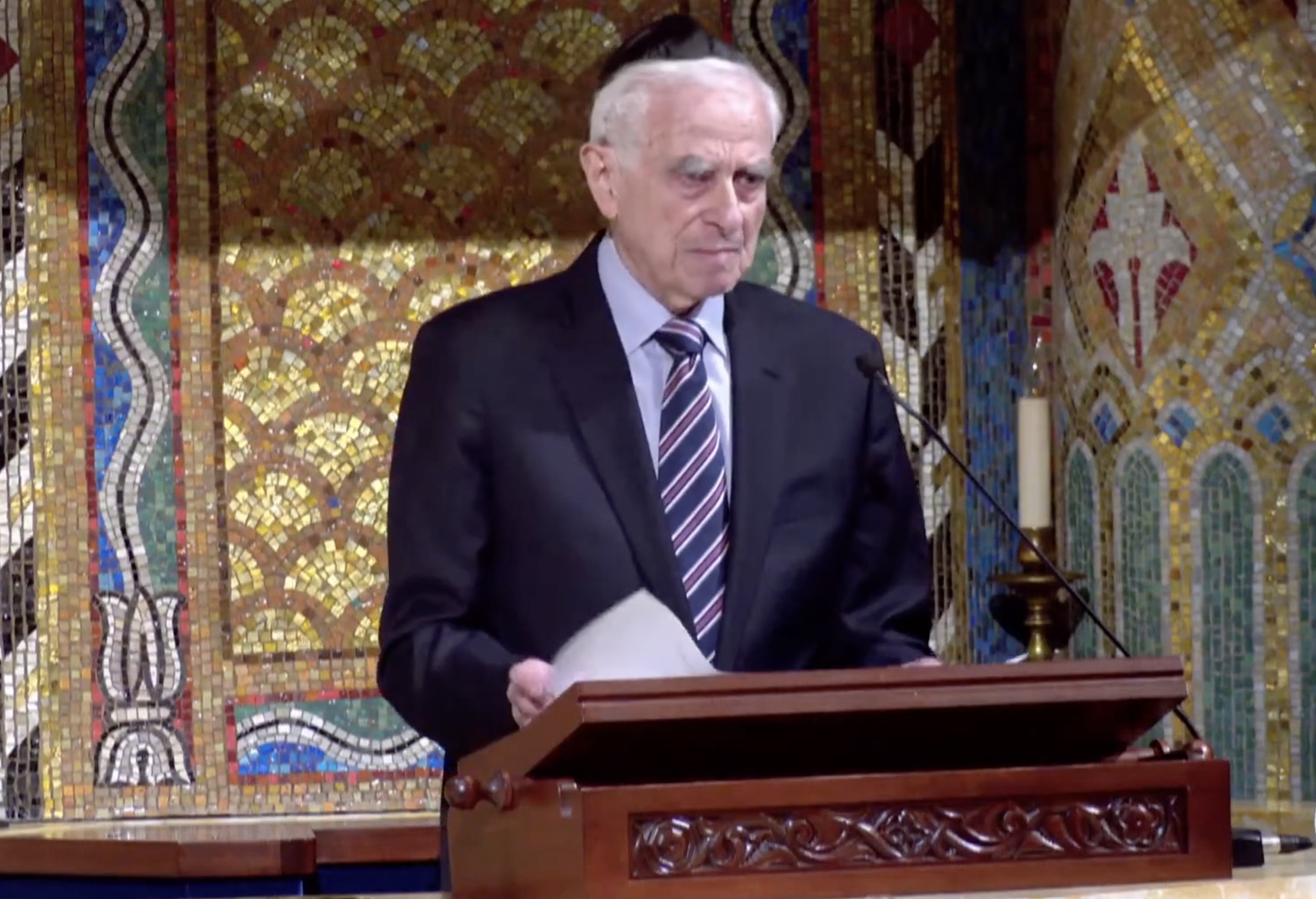
Holocaust survivor Fred Schoenfeld speaks yesterday at the Museum of Jewish Heritage – A Living Memorial to the Holocaust’s Annual Gathering of Remembrance at Temple Emanu-El in New York City.
“What stays with me the most, even now, are not only the horrors but the fragments of humanity that endured in spite of them. A shared piece of bread, a whispered word of comfort, the determination to survive one more day,” Schoenfeld said. “After the war, there was no returning to what had been. The people, the communities, the entire worlds we knew — they were gone. And yet we were asked to rebuild, to begin both as individuals and as the global Jewish community. In fact, one of the most important rebuilding projects was the State of Israel, which is now a thriving home of the Jewish people. In fact, if Israel had existed just 10 years earlier, the Jews of Europe could likely have been saved.”
Schoenfeld added the importance of sharing stories like his, calling on the next generation to keep them alive. “For many years, survivors carried these stories quietly, some out of pain, some out of the belief that the world might not understand or might not want to listen. But today I speak because memory matters,” he said. “I speak because each time a story is shared, something is restored. And I speak to you, especially to the younger generations, because remembrance now lives in your hands.”
|
|
|
Art historian, philanthropist and author of the KosherLikeMe website, Liz Rueven...
Curator and then director of the Louvre until 2001, he is the son-in-law of the late Alain de Rothschild, Pierre Rosenberg turns 90... Geneticist and 1985 Nobel Prize laureate in medicine, Michael Stuart Brown turns 85... Author and feminist leader, she is the former CEO of Planned Parenthood Federation of America, Gloria Feldt turns 84... Managing director at Tiedemann Advisors, he was
previously a vice chair at Goldman Sachs and a high-ranking State Department official, Robert D. "Bob" Hormats turns 83... Retired member of the U.S. House of Representatives (D-CA) after 10 terms, Susan Carol Alpert Davis turns 82... Vice president of the New Israel Fund, Paul Egerman... Actor who won a Golden Globe for his portrayal of Vincent in the television series
"Beauty and the Beast," Ron Perlman turns 76... Longtime drummer for Bruce Springsteen's E Street Band and the bandleader for “The Tonight Show with Conan O'Brien,” Max Weinberg turns 75... Partner in Uplands Real Estate Partners, Deborah Ratner Salzberg... Former member of the U.K. Parliament until 2005, she served as the U.K.'s first ever minister of state for asylum and
immigration under then-Prime Minister Tony Blair, Barbara Margolis Roche turns 72...Author of six books and co-host of “Democracy Now!,” a daily global independent news hour, Amy Goodman turns 69... . Former orthopedic surgeon, he was the Democratic nominee for the 2020 U.S. Senate election in Alaska, Alan Stuart Gross turns 64... President Donald Trump’s nominee for chair of the Federal
Reserve, he was the youngest-ever Federal Reserve governor until 2011, Kevin Warsh turns 56... Lead vocalist and founding member of the rock group "Staind," he has also enjoyed a successful solo career in country music, Aaron Lewis turns 54... CEO and executive director of D.C.-based Sixth & I, a center for arts, entertainment and ideas, Heather Moran... Staff writer at Tablet
Magazine, Armin Rosen... Senior director of government relations at FDD Action, Alexandria Paolozzi... General partner at Overmatch Ventures, Morgan Hitzig… Senior consultant at Gray Ink, Lauren Epstein Schwartz… Sales executive at Sign Source NJ, Aharon Lipnitsky… Helene Cash…
|
|
|
|