
Your Daily Phil |
OCTOBER 7, 2026
GOOD WEDNESDAY MORNING.
In today’s edition of Your Daily Phil, we spotlight the Israel Children’s Fund as it supports 573 children and young adults who lost one or both parents in the Oct. 7 attacks, and look at how Oct. 7 reshaped the Jewish nonprofit world and its leaders. We examine eJP’s coverage over the past three years, and speak with former Israeli hostages Aviva and Keith Siegel as they continue to rebuild their lives three years after they were taken hostage into Gaza. We feature an opinion piece by Lisa Fishbayn Joffe and Ruth Halperin-Kaddari about changes necessary to ensure that victims of conflict-related sexual violence have a better chance of obtaining justice through the legal system; and one by Eliana Leader and Maya Talmon Chvaicer about why Jewish retreat spaces can be an important part of North American Jewry's philanthropic response to Oct. 7 and the years of war that have followed. Also in this issue: Shoshan Haran, Aron Troen and Beth Oppenheim.
Have a tip? Email us here.
What We're Watching
Today marks the three-year anniversary of the Hamas-led Oct. 7 terror attacks. In Israel and around the world, communities will mark the day with solemn ceremonies and memorials, as well as demonstrations. Ceremonies on individual kibbutzim and at the site of the Nova music festival began as early as 6:29 a.m. local time, marking the minute that the attacks began.
In Israel this evening, Eli Sharabi is co-hosting the official National October 7 Memorial in Tel Aviv, where he will be joined by other former hostages and relatives of victims. In New York, Omer Shem Tov is slated to speak tonight at Yeshiva University, while Or Levy will address a commemoration ceremony on Long Island. Eliya Cohen and his wife, Nova survivor Ziv Abud, are speaking in Boston, and Yosef Chaim Ohana and Nova survivor Daniel Sharabi are speaking at a community memorial in Denver. In France, Omri Miran will speak at the European Union’s official commemoration event.
Jonathan Dekel-Chen, father of former Israeli hostage Sagui Dekel-Chen, and Jaser AbuMoussa, the Yale Peace Fellow at the Jackson School for Global Affairs whose wife and two of his children were killed in an Israeli airstrike in Gaza, will appear together this evening at the 92NY in New York for a conversation with acting Columbia University President Claire Shipman about the path towards peace.
And some will mark the anniversary by protesting against Israel, including on several college campuses and at New York City Hall, where anti-Israel groups including PAL-Awda, Within Our Lifetime and the youth chapter of the New York City Democratic Socialists of America are promoting a rally with a flyer that features the phrase, “Glory to the martyrs, victory to the resistance.”
What You Should Know
The Oct. 7 attacks shattered Israelis' faith in their government's ability to keep them safe. It sparked multiple wars and a geopolitical realignment in the Middle East. But perhaps lost in the profound changes wrought by the attacks is the plight of Israel's most vulnerable — the orphans of Oct. 7, reports eJewishPhilanthropy’s Judah Ari Gross.
In a single bloody day, hundreds of Israeli children and young adults had their lives upended as their parents were butchered in the deadliest terror attack in Israel’s history and one of the deadliest ever. In some cases, they too were injured by the very terrorists who killed their parents or were forced to witness the brutality; in others, they learned of it from afar.
Three years after the Oct. 7 massacres, their needs — financial, psychological, social, educational — remain immense. They are also unique. “Everything is much slower than you would believe,” Modi Kidon, the co-founder and chairman of the Israel Children’s Fund, told eJP recently. “We have to be more patient. Each one of them is a different story.”
The Israel Children’s Fund, known in Hebrew as Atufim B’Ahava (“Wrapped in love”), supports 573 Oct. 7 orphans, from those that were still in utero when their fathers were killed up to those age 30. Asked how the needs of beneficiaries have changed after three years, from the initial months after the Oct. 7 attacks to today, the group’s CEO Miri Yaacobi Horowitz stressed that it varies, from support for “basic functioning,” and rehabilitation to grants for joyful occasions, marking growth and progress.
“We have already helped with more than 30 weddings,” she said, noting that they have also given 11 grants to adult orphans who have had their first child and 33 grants for children celebrating a bar or bat mitzvah, as well as 79 scholarships for higher education. “So life goes on, but it’s still slower than you’d think,” she said. “Recovery is a very slow process.”
News
PHILANTHROPY PIVOT
How Oct. 7 shaped and reshaped the Jewish nonprofit world and its leaders
The Jewish world marks time these days with a stark dividing line: Before Oct. 7 and After Oct. 7. And ahead of the third anniversary of the attacks, eJewishPhilanthropy’s Jay Dietchter examined how the leaders of groups like the Jewish Federations of North America, American Friends of Magen David Adom, the Joint Distribution Committee, as well as New Israel Fund and IsraAid, navigated those emotion-filled early days and helped shape the profound changes in the Jewish nonprofit world that were just beginning to emerge.
Constant crisis: The attacks created 800,000 new vulnerable people in Israel, Ariel Zwang, CEO of the American Jewish Joint Distribution Committee, estimates — families of the over 300,000 reservists called to duty, displaced families, the injured and people struggling with newly formed mental illnesses. At the same time as JDC was supporting Israelis — even cooking meals for displaced families out of the organization’s offices in Jerusalem — it was still assisting vulnerable Jews across the world. “If I had to summarize the largest ‘aha’ for me and for JDC,” Zwang said, “I would say, in the last five years, not only in the last three, [it] is that crisis has become constant for the Jewish people.”
COVERING CRISIS
Three years since Oct. 7 told through the stories that documented it
One month before Hamas terrorists attacked Israel's South at 6:29 a.m. on Oct. 7, 2023, Israeli-Palestinian dialogue groups held a West Bank race to promote peace initiatives. Two days before Oct. 7, eJewishPhilanthropy reported on an Anti-Defamation League study that found a major drop-off in BDS resolutions on college campuses and wondered what would be next for anti-Israel activism on campuses. But that was all before the terror attacks that razed and burned large swaths of southern Israel, forever altered the country’s psyche, prompted an ongoing regional conflict and led to a global, meteoric rise in antisemitism around the world, reports eJP’s Nira Dayanim.
Focus shift: After the Oct. 7 attacks, the Jewish world’s focus — and eJP’s coverage — was immediately directed overwhelmingly to the victims and survivors, the hostages and the displaced, the emergency needs and the efforts to meet them. Three years later, the consequences of the Oct. 7 attacks continue to be felt and seen in nearly every article we produce.
LIFE AFTER CAPTIVITY
The Siegels lost their home and community on Oct. 7. Now they're finding their way forward
Keith Siegel was held captive by Hamas for 484 days. Of those, 433 of them were spent apart from his wife, Aviva, who was taken hostage with him but released after 51 days in captivity. “Every day counts,” he was quick to point out on Tuesday, when he and Aviva met with Melissa Weiss for eJewishPhilanthropy’s sister publication Jewish Insider in Tel Aviv ahead of the third anniversary of the Oct. 7 Hamas attacks on Israel. “Maybe every hour.”
In part to deal with the trauma of her abduction and ordeal in Gaza, Aviva wrote a book about her experiences, Survived to Tell: A Hostage’s True Story of October 7 and 51 Days in Captivity. “I remember thinking, ‘I have to leave all these words for our grandchildren, because if Keith doesn’t come home, and he might never ever come home alive, that they’ll be able to read the love between us and how amazing Keith was,’” Aviva reflected.
Read the full interview and sign up for Jewish Insider’s Daily Kickoff →
Next chapter: On the third anniversary of the attacks, and with every hostage either returned alive or brought home for burial, Kibbutz Be’eri survivor Shoshan Haran, who was, like the Siegels, taken hostage, is allowing herself to think about what comes next. “This is the first anniversary that we can start looking at the future,” she told Jewish Insider’s Haley Cohen. Her new memoir, Mission in Captivity: One Woman's Struggle to Survive and Save Her Family in Gaza, is part of that next chapter — an effort to document what she experienced, mourn what she lost and make her voice heard about the events of Oct. 7 and their aftermath.
Opinion
AN URGENT NEED
Three years after Oct. 7, recognition is no longer enough
In an opinion piece for eJewishPhilanthropy, Lisa Fishbayn Joffe and Ruth Halperin-Kaddari highlight the legal challenges in establishing accountability and ensuring justice for victims of conflict-related sexual violence like that perpetrated on Oct. 7, 2023, and in Hamas captivity. Fishbayn Joffe is the Shulamit Reinharz Director of the Hadassah-Brandeis Institute at Brandeis University, and Ruth Halperin-Kaddari is the founding director of the Rackman Center at Bar-Ilan University, a founding member of the Dinah Project and co-author of the book A Quest for Justice: October 7 and Beyond.
“The experience of Oct. 7 must lead us to strengthen the international framework for addressing CRSV and ensure that our institutions measure up to the values they were created to uphold. Doing so would not only honor the murdered and bring a degree of accountability to survivors, but also enable us to set precedents for addressing similar crimes that may take place in the future, both in Israel and around the world.”
CRITICAL CARE
What we can offer that cannot be sent
In an opinion piece for eJewishPhilanthropy, Eliana Leader, director of the Ramah Darom Retreat Center, and Maya Talmon Chvaicer, chief development officer of Bshvil Hamachar, note that the North American Jewish community has “communal assets” — camps and retreat centers with land, lodging, kitchens, ritual infrastructure and professionals who create intentional Jewish environments — that can aid in the recovery of Israeli combat veterans and allow them to experience the Diaspora as more than just a source of funding.
“Our collaboration did not begin with the premise that a Jewish retreat center could improve upon Bshvil Hamachar’s proven therapeutic model. Instead, it began with a question: What might become possible if participants could gain the distance they needed without leaving the embrace of the Jewish people?”
Worthy Reads
‘We Are Sorry’: In The Times of Israel, Aron Troen, whose sister and brother-in-law were murdered in the Oct. 7 attacks, demands real accountability from the government for the tragedy. “Three years have passed – and to this day, not a single minister, not a single representative of the government, has come. Not to visit. Not to explain. Not to comfort. Not to look us in the eye and say the obvious: We are sorry. We failed. Not to say: We were wrong. Not to say: We will investigate fully, and do everything possible so that it never happens again. But we are no longer waiting. And we no longer have any expectations.”
Boxes Waiting: In The Atlantic, Haaretz journalist and Nahal Oz resident Amir Tibon reflects on moving his family back to the kibbutz they fled three years after surviving Oct. 7, but that he and his wife would consider leaving Israel if Prime Minister Benjamin Netanyahu's coalition wins the Oct. 27 election. “For our little family, in our home next to the Gaza border, with our boxes still waiting to be opened, this election comes down to the preservation of hope. It's not much, but it's also not nothing. Mostly, we hope that the election can be the beginning of something we still want to believe in: a better Israel.”
Memory As Resistance: In his Substack “Identity/Crisis,” Shalom Hartman's Yehuda Kurtzer writes that anti-Israel groups are seizing Oct. 7 for their own protests, and he urges Jews to keep marking the date publicly while also holding their own memory through Simchat Torah and Jewish ritual. “To absorb our sufferings into Jewish time is one of the Jewishest things we do… The fact of our enduring memory is a testament to our continued survival, and ritual is a form of our resistance.”
Community Comms
SPONSORED | Email us to place an advertisement to the eJP readership of your upcoming event, job opening or other announcement.
Transitions
HIAS CEO Beth Oppenheim abruptly left the organization after less than a year in the role…
Omer Woodward is leaving his role as executive director of HRS Management, the Josh and Marjorie Harris’ family office, and starting a new role as both senior vice president of corporate giving at Harris Blitzer Sports & Entertainment and as executive director of the Wilt Chamberlain Memorial Fund…
Jamie Darsa began her role as chief of strategy and impact at the Jewish Community Relations Council of Greater Boston…
Melanie Koss Goren joined Nevo Network as head of ecosystem and programs…
Word on the Street
Israel's National Security Council warned of a heightened terror risk to Israelis and Jews on the Oct. 7 anniversary and urged Israelis abroad to avoid speaking Hebrew in crowded places…
The New York Times spotlights former hostages Gali and Ziv Berman, twins from Kibbutz Kfar Aza who were among the last living hostages to be released, as they adjust to life post-captivity…
A new Israel Democracy Institute poll found that about 62% of Israelis say Oct. 7 will be central to how they vote in the Oct. 27 election…
The Likud party dropped its challenge to the AID Coalition’s Fly&Vote initiative after the AID Coalition agreed not to subsidize tickets or add flights beyond the six that it advertised, under a compromise proposed by Israel’s Central Elections Committee Chair Noam Sohlberg. Read about eJewishPhilanthropy's coverage of the Fly&Vote Initiative here…
The Wall Street Journal interviews young Americans who chose to immigrate to Israel following the Oct. 7 attacks…
Zambia's Ministry of Agriculture has invited the Israeli aid group Tevel B'Tzedek to work with at least 2,000 families on a $10 million irrigation project covering 600 hectares…
The Department of Education accused colleges of trying to hide their foreign donors after the American Association of Universities sued to block release of a report on them that a federal judge has temporarily halted, Jewish Insider’s Marc Rod reports…
A new Honan Strategy Group poll of 503 Jewish voters in New York City found 51% say their support for the Democratic Party has weakened since Oct. 7 and 61% view the Democratic Socialists of America as hostile to Jewish interests, reports Jewish Insider’s Marc Rod…
British Airways and Iberia are slated to resume daily flights to Ben Gurion Airport later this month…
Rebeca Grynspan, a Costa Rican economist and daughter of Holocaust survivors, has won three of four Security Council straw polls in the race for U.N. secretary-general, though her path to victory is unclear…
Actor Eva Marie Saint, known for her role in “Exodus,” died at 102…
Photo of the Day
YONATAN SINDEL/FLASH90
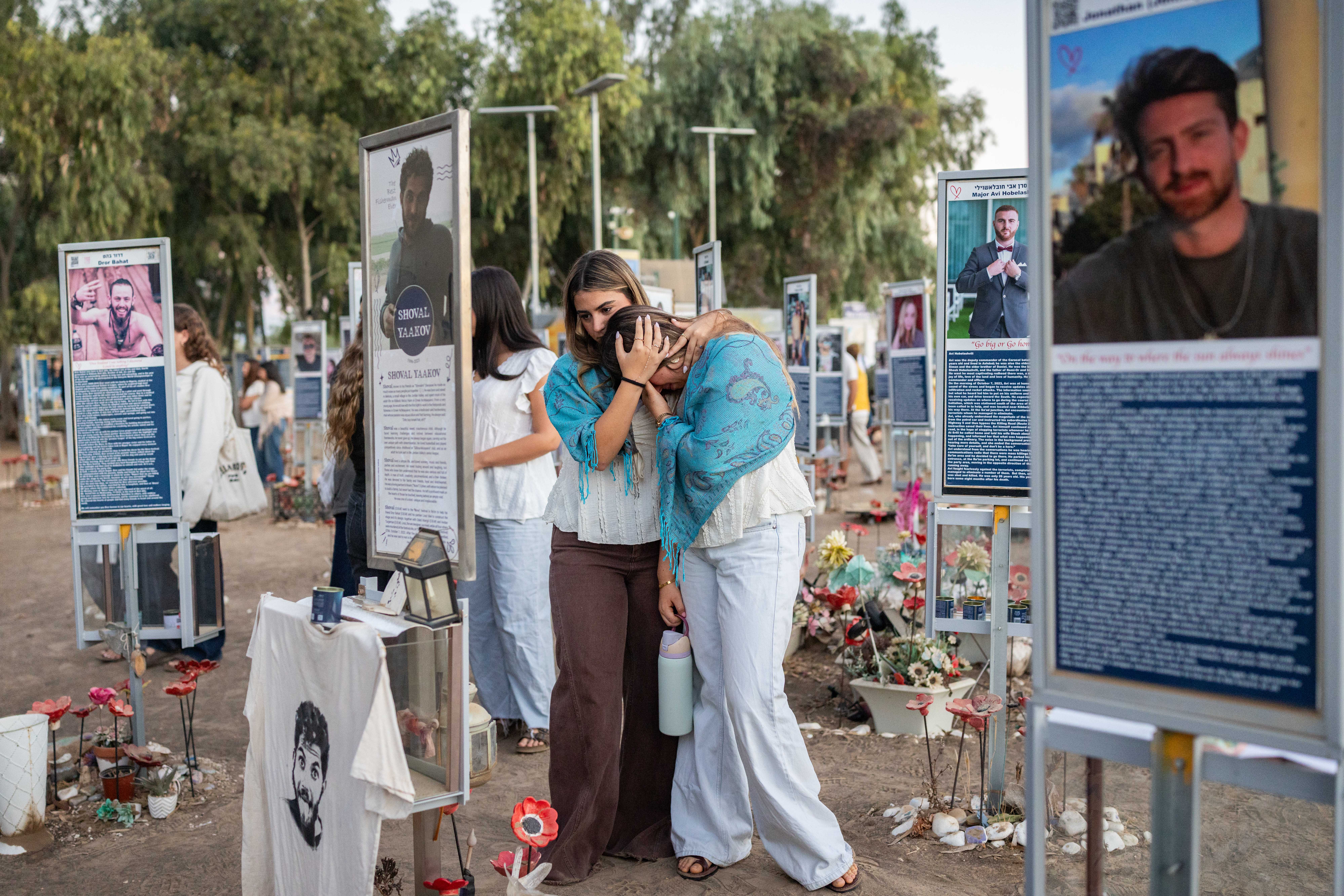
Family and friends of the 378 people killed at the Nova musical festival on Oct. 7 visit the memorial site this morning near Kibbutz Reim in southern Israel, on the third anniversary of the massacre.
Birthdays
COURTESY
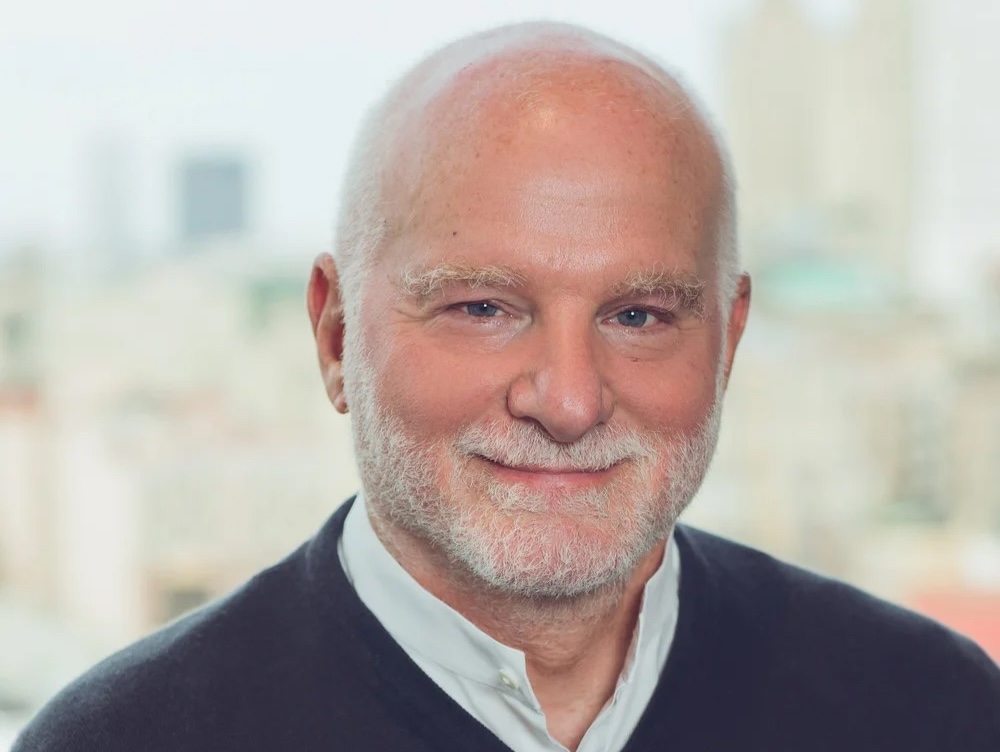
Michael W. Sonnenfeldt, entrepreneur and political activist, he co-founded the Israel Policy Forum in 1993, turns 71
Robert Ian Kaufelt, former owner of Murray's Cheese, the nation's leading purveyor of artisanal cheese, turns 79
Allan Nelkin, retired chairman and CEO of Halco Lighting Technologies
Margery Nyberg, Highland Park, Ill., resident
Barry Curtiss-Lusher, co-founder, chair and former CEO of energy company Nexus BSP, he is a former national chair of the Anti-Defamation League, turns 75
Jill Smith, former chair of the Jewish Foundation for Education of Women and chair of the Prize Committee of the Genesis Prize Foundation, turns 73
Bruce Lawrence Bialosky, founder of the Republican Jewish Coalition of California and a former member of the U.S. Holocaust Memorial Council, turns 73
Ron Vosatka, former deputy director of community security at the Jewish Federation of Palm Beach County
Kenneth L. Marcus, founder and chair of the Louis D. Brandeis Center for Human Rights Under Law, he served as assistant secretary of education in the Trump administration, turns 60
Eli Saulson, president of Detroit's Imperial Management and a board member of the William Davidson Foundation
Gabriele Corcos, creator, host and producer of “Extra Virgin” on the Cooking Channel, turns 54
Matthew Sklar, composer for musical theatre on Broadway and the West End, television and film, turns 53
Rabbi David-Seth Kirshner, rabbi of Temple Emanu-El in Closter, N.J.
Arie Lipnick, political fundraiser and strategist, advisory board chairman of the Combat Antisemitism Movement
Michael Malchieli, member of the Knesset for the Shas party and former minister of religious affairs, turns 44
Natalie Lascar Lefkowitz, SVP of the leadership institute at AIPAC
Adam Teitelbaum, founder of Level III Industries after holding roles at the Jewish Federations of North America, AIPAC and AEPi
Daniel Mael, CEO of Holbrook, N.Y.-based MW Impressions
Tayla Harris, executive assistant for global client operations at WPP
Barbara Martinez, an original Politico staffer, now a manager of editorial and content strategy for the U.S. Holocaust Memorial Museum
Sam Schear, principal on the real estate team at Korn Ferry
Tamara Harel-Cohen, co-founder and chief growth officer at Riseup



You are receiving this email because rachel@ejewishphilanthropy.com signed up for updates from eJewishPhilanthropy.
Submit an op-ed • Send a tip • Advertise With Us • Subscription questions
© 2026 eJewishPhilanthropy • 228 Park Ave S • PMB 40660 • New York • NY 10003
Manage Email Preferences • View in Browser • Tracking Preferences